Latest Updates Click Here


RWA Tokenization Platform Development in 2026: The Complete Guide
Explore RWA tokenization platform development: how it works, must-have features, tech stack, and real 2026 costs from MVP to full-scale builds.
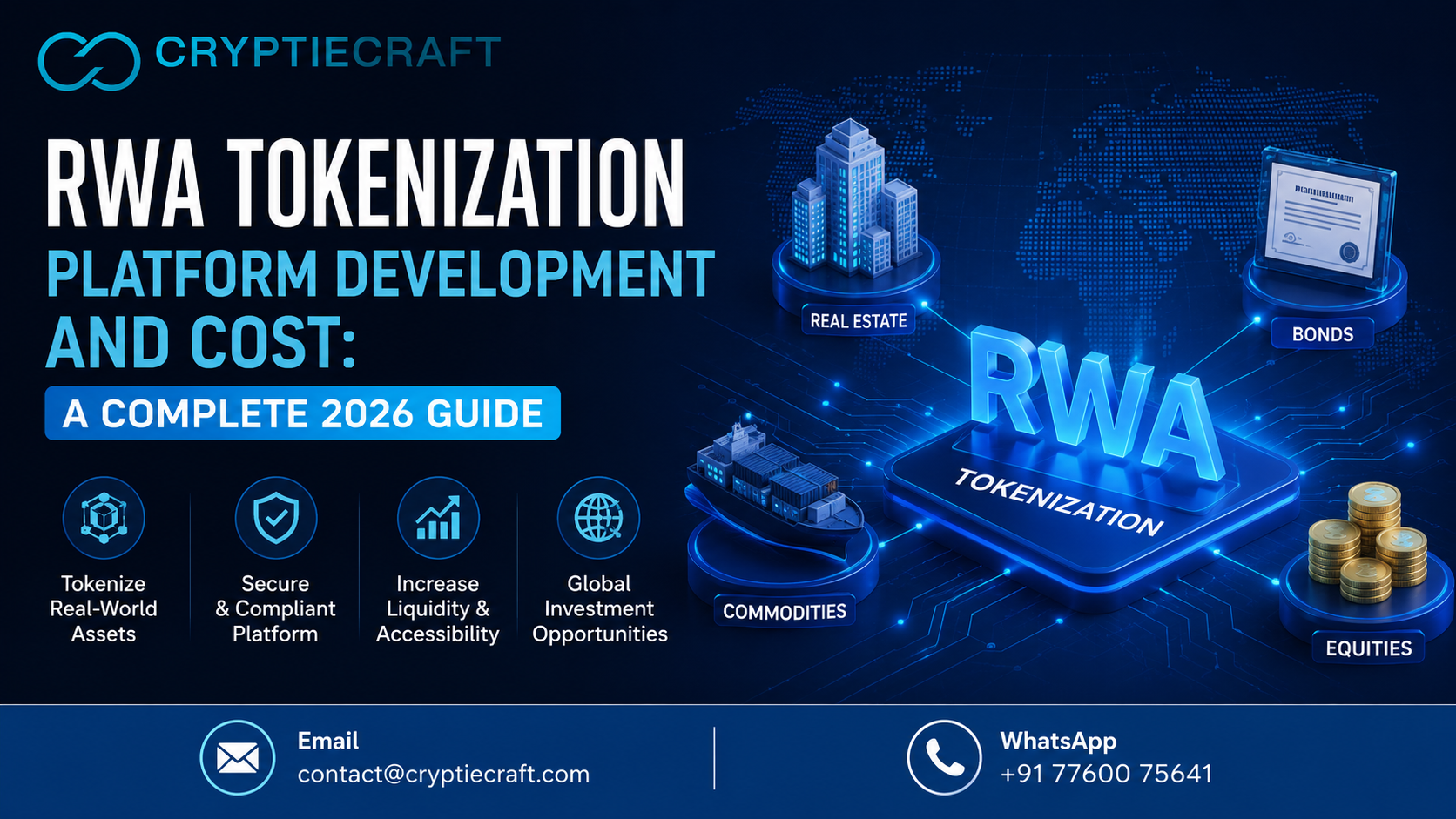
Tokenizing real world assets has moved past the experimental phase. Banks are running live pilots, private funds are issuing tokenized shares, and property developers are opening buildings up to fractional investors. If you're weighing whether to build a platform in this space, here's a grounded, no-fluff walkthrough of how it works, what it takes to build, and what it will cost you.
Why 2026 Is the Right Moment for RWA Tokenization
Momentum has shifted from pilot programs to production systems. Large custodians now run tokenized treasury and money-market products at real scale, and that alone has changed how seriously institutions take the category.
Three asset classes are leading the charge: property, commodities, and private market instruments like fund shares and credit. Each one shares the same underlying problem tokenization solves well assets that are hard to sell quickly can now trade in fractions, opening them up to a far wider investor base.
Founders and enterprises jumping in now are betting on a narrow window. Regulatory frameworks are becoming clearer in the US, EU, and Gulf markets, and the infrastructure needed to launch compliant platforms has matured enough that teams no longer need to build everything from scratch.
Understanding the Platform From a Builder's Point of View
At its core, a tokenization platform is a pipeline connecting a real asset to a digital representation of it. An asset owner submits documentation, lawyers structure the asset into a legal wrapper that gives token holders enforceable rights, a smart contract mints the tokens, and verified investors trade them through a marketplace.
The tricky part most teams underestimate is the gap between on-chain and off-chain. The token lives on a blockchain, but the property, bond, or commodity it represents sits firmly in the physical or traditional financial world. A smart contract has no power to enforce a deed or a bond covenant on its own — that link has to be built through legal structuring, not code.
Custodians safeguard the underlying asset, oracles feed real-world pricing and valuation data into the contracts, and a compliance layer sits over the whole system enforcing KYC and jurisdictional rules automatically.
What Kinds of Assets Actually Get Tokenized
- Commercial and residential real estate
- Corporate and government bonds, private credit
- Commodities like gold, oil, and agricultural goods
- Art, collectibles, patents, and royalty streams
- Startup equity and revenue-sharing arrangements
Real estate and debt dominate transaction volume today because they map cleanly onto legal structures regulators already understand. Art and collectibles are growing but still wrestle with valuation trust, since there's no standardized pricing mechanism the way there is for bonds or gold.
Features That Actually Matter
An investor's trust in a platform comes down almost entirely to its features, not its marketing copy.
Onboarding and verification — a structured intake process where sellers submit ownership documents and valuations before anything gets tokenized.
Automated smart contracts — handling minting, income distribution, and redemption without manual steps that introduce error or delay.
An investor dashboard — clear visibility into holdings, distributions, and documentation.
Built-in KYC/AML — identity checks tied directly to token issuance so unverified wallets are blocked automatically.
A working secondary market — order books or liquidity pools that let investors exit a position without waiting for the whole underlying asset to sell.
The Technology Behind These Platforms
Ethereum is still the most common base layer for institutional platforms because of its security history, though Polygon and Avalanche are popular for their lower fees. Many teams now run multi-chain setups to serve different investor segments at once.
Token standards vary by use case: ERC-20 for fractional, fungible ownership; ERC-721 for a single unique asset like one property; and ERC-1400 for regulated, transfer-restricted security tokens.
On the backend, a Node.js or Go service paired with a React or Next.js frontend is the standard combination, tied together through APIs that connect to custodians, KYC vendors, and payment processors.
Security is where budgets get tested. Multi-signature wallets, hardware security modules, and independent audits aren't optional line items — they're what separates a platform investors trust from one that gets exploited in its first year.
How the Build Actually Happens, Step by Step
- Define the target asset classes and investor base before writing a single line of code
- Work with legal counsel to structure the entity and determine securities classification per jurisdiction
- Build and internally test the smart contracts governing issuance and transfer
- Design the onboarding flow, investor dashboard, and admin panel
- Run third-party audits, penetration testing, and a staged mainnet launch
Every team wants to move fast here, but skipping the legal structuring step or rushing the audit almost always turns into a much more expensive fix after launch, either as a security incident or a regulatory problem.
If you want the deeper version of this walkthrough, including where teams typically underestimate timelines, this RWA tokenization platform development guide breaks the whole build down stage by stage.
What It Actually Costs in 2026
| Component | MVP | Full-Scale Platform |
|---|---|---|
| Smart contract development | $15,000 – $35,000 | $40,000 – $90,000 |
| Legal structuring and compliance | $10,000 – $25,000 | $30,000 – $80,000 |
| KYC/AML, payment, custody integrations | $8,000 – $20,000 | $25,000 – $60,000 |
| UI/UX and dashboard build | $10,000 – $25,000 | $30,000 – $70,000 |
| Security audits | $8,000 – $15,000 | $20,000 – $40,000 |
| Total | $50,000 – $120,000 | $150,000 – $350,000+ |
An MVP is usually the right call for validating demand around one asset class before expanding further. Full-scale builds, supporting multiple asset types and multi-jurisdiction compliance with a live secondary market, sit at the top of that range. Plan on an additional 15-20% of the build cost annually just for maintenance and compliance updates once you're live.
What Actually Moves Your Budget
- The asset type — real estate carries far more legal overhead than a straightforward commodity token
- How many jurisdictions you're operating in at once
- Which blockchain you build on, since gas costs compound at scale
- Whether you go custom or license a white-label solution
- How deep your audit and security requirements need to go
For a granular look at how these variables actually change a quote, this breakdown of RWA tokenization platform development costs walks through real pricing scenarios.
How These Platforms Actually Make Money
Most successful platforms layer two or three revenue streams rather than relying on one:
- Issuance fees charged when an asset is tokenized
- Trading fees on secondary market activity
- Ongoing asset management fees
- Subscription or licensing fees for enterprise clients running white-label deployments
The Regulatory Reality
The US largely treats tokenized assets as securities under existing law, which means SEC-compliant structuring from day one. The EU's MiCA framework has brought welcome clarity across member states. The UAE, through ADGM and VARA, has positioned itself as one of the more tokenization-friendly jurisdictions anywhere. India remains cautious, with tokenized securities still sitting in a regulatory gray zone.
Whether a token counts as a security fundamentally changes what compliance infrastructure you need, so getting a legal opinion on classification before development starts is one of the cheapest insurance policies you can buy for the project.
The Real Challenges Teams Run Into
Liquidity is the most common one — solved by partnering with existing exchanges or seeding incentivized liquidity pools before launch, not after.
Valuation trust matters more than people expect; independent, regularly refreshed third-party valuations beat self-reported numbers every time.
Regulatory uncertainty is best handled by building compliance logic that's configurable per jurisdiction rather than hardcoded, so a rule change doesn't force a rebuild.
Scalability issues usually trace back to blockchain choice — pick infrastructure that can absorb transaction spikes without gas costs becoming unworkable for smaller investors.
Real Examples Worth Studying
Fractional real estate platforms have opened commercial property investment to people who could never have afforded a full unit, sometimes with buy-ins of a few hundred dollars. Tokenized money-market funds from major asset managers now settle in minutes instead of days. Commodity tokenization is giving supply chains provable, real-time proof of reserves for gold and agricultural goods.
Picking the Right Development Partner
Look for proven experience with security token standards, not just standard ERC-20 work. Confirm they have real legal expertise across your target jurisdictions, not a single boilerplate template. Ask to see a completed smart contract audit from a past project, and get clarity on what post-launch support actually includes before signing anything.
A useful gut check: if a firm quotes you a flat price without first asking about your asset type, target jurisdiction, or compliance needs, treat that as a warning sign. Those three variables change scope too much for a generic number to mean much.
If you're weighing vendors, it also helps to compare notes with a specialized crypto token development company that has shipped security-token projects before, rather than a generalist shop bolting tokenization onto a standard app build.
Where the Category Is Headed Next
Tokenized assets are increasingly being used as collateral inside DeFi lending protocols, blurring the line between institutional finance and decentralized systems. Cross-chain tokenization is making assets portable instead of locked to a single ecosystem. AI-driven valuation models are starting to replace periodic manual appraisals with real-time pricing. Longer term, the direction points toward 24/7 global trading of assets that were historically illiquid for good reason.
Is It Worth Building Now?
Platforms that get the legal structuring right and pick asset classes with genuine liquidity demand are already seeing strong early returns as institutional capital keeps flowing in. Enterprises with existing asset portfolios and startups with solid legal partnerships are the best positioned to move now, before the category gets crowded.
The practical next step isn't a global, multi-asset launch on day one. Start narrow: one asset class, one jurisdiction, prove the model works, then expand. That's the difference between platforms that make it to their second year and the ones that stall out before reaching investors at all.
Share On :
Tweet | LinkedIn | |