Not sure what to check before booking temporary chiller hire? This guide explains seven essentials: cooling load, chiller type, temperature and flow, power supply, space and noise, delivery scope, and support. It also covers when generator hire is needed to run a chiller.
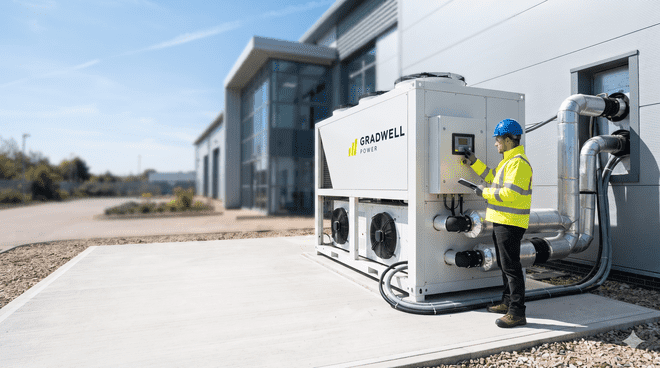
Temporary chiller hire supplies cooling quickly when a permanent system fails, is being serviced, or cannot meet demand. Before you book temporary chiller hire, seven simple checks help you avoid delays, mismatched equipment, and surprise costs. In this guide, we’ll walk through each one, from cooling load to power supply, so you can book with confidence.
Temporary chiller hire means renting a portable cooling unit for a set period, instead of buying one. The chiller cools water or another fluid, which is then circulated to equipment, processes, or building systems.
It is commonly used for:
Hiring is faster than buying and avoids long term storage and servicing. The key is booking the right unit the first time.
Everything starts with how much cooling you need. Cooling load is usually measured in kilowatts, and it depends on the equipment, the space, and the heat it produces.
Underestimating the load leaves systems running hot. Overestimating it wastes money on a larger unit than necessary. If you are unsure, ask your supplier to help size the load, and share details such as equipment lists and operating hours.
Chillers differ in how they reject heat. Air cooled units use fans and suit most temporary jobs because they need no cooling tower. Water cooled units can be more efficient, but they need a water supply and extra setup.
Ambient temperature matters too. A unit that performs well in cool weather may struggle in a summer heatwave, so confirm its rated performance for your conditions.
Your system needs cooling at a specific temperature and flow rate. Confirm the required supply and return temperatures, plus the flow your equipment needs.
Also check pipework sizes, connection types, and whether glycol is required for low temperatures. Mismatched connections are a common cause of delays on the day of installation.
Chillers draw significant power, particularly at start up. Check that your site’s supply can handle the load, including the starting current, before the unit arrives.
If mains power is limited or unavailable, you may need generator hire alongside the chiller. Pairing the two correctly matters, because an undersized generator can trip under the chiller’s start up load. Many hire suppliers offer both, which makes planning simpler.
A chiller is a large piece of kit. Measure the available space, and confirm the ground can support the weight. Check that delivery vehicles and lifting equipment can reach the position.
Noise is another factor, especially near homes, hospitals, or offices. Ask for the unit’s noise rating, and check whether local restrictions apply to your site.
Find out exactly what is included. Some hire packages cover delivery only, while others include connection, commissioning, and collection.
Useful questions include:
A clear scope avoids gaps between what you expect and what arrives.
Cooling failures can stop production or damage equipment, so support matters. Ask what breakdown cover is included and how quickly engineers can respond.
Remote monitoring is also worth asking about. It lets the supplier watch temperatures and faults in real time, and it can flag problems before they cause downtime. Check hire terms as well, including minimum periods and extension options.
Booking temporary chiller hire goes smoothly when the details are right. Calculate your cooling load, pick the correct chiller type, confirm temperature and flow needs, check power, plan for access and noise, clarify what’s included, and confirm support. Where mains power is limited, factor in generator hire early so the two systems work together.
For safety guidance on temporary installations and equipment on site, the Health and Safety Executive is a trusted starting point. To put this into practice, run through the seven checks above, then request quotes from two or three suppliers and compare what each one includes.