Explore the average lifespan of dental implants, factors affecting their durability, common complications, and practical maintenance tips that support long-term implant stability and oral health.
Dental implants have become a widely used option for replacing missing teeth and restoring everyday oral function. Unlike removable tooth replacement options, implants are placed within the jawbone to provide a stable foundation for artificial teeth. They can help patients chew comfortably, speak clearly, and maintain a natural-looking smile. However, one of the most common questions patients have is how long dental implants actually last.
The lifespan of an implant depends on several factors, including oral hygiene, bone health, lifestyle habits, and regular dental care. Although implants are designed to provide long-term support, their durability varies from person to person. Understanding the factors that influence implant longevity can help patients protect their investment and maintain better oral health over time.
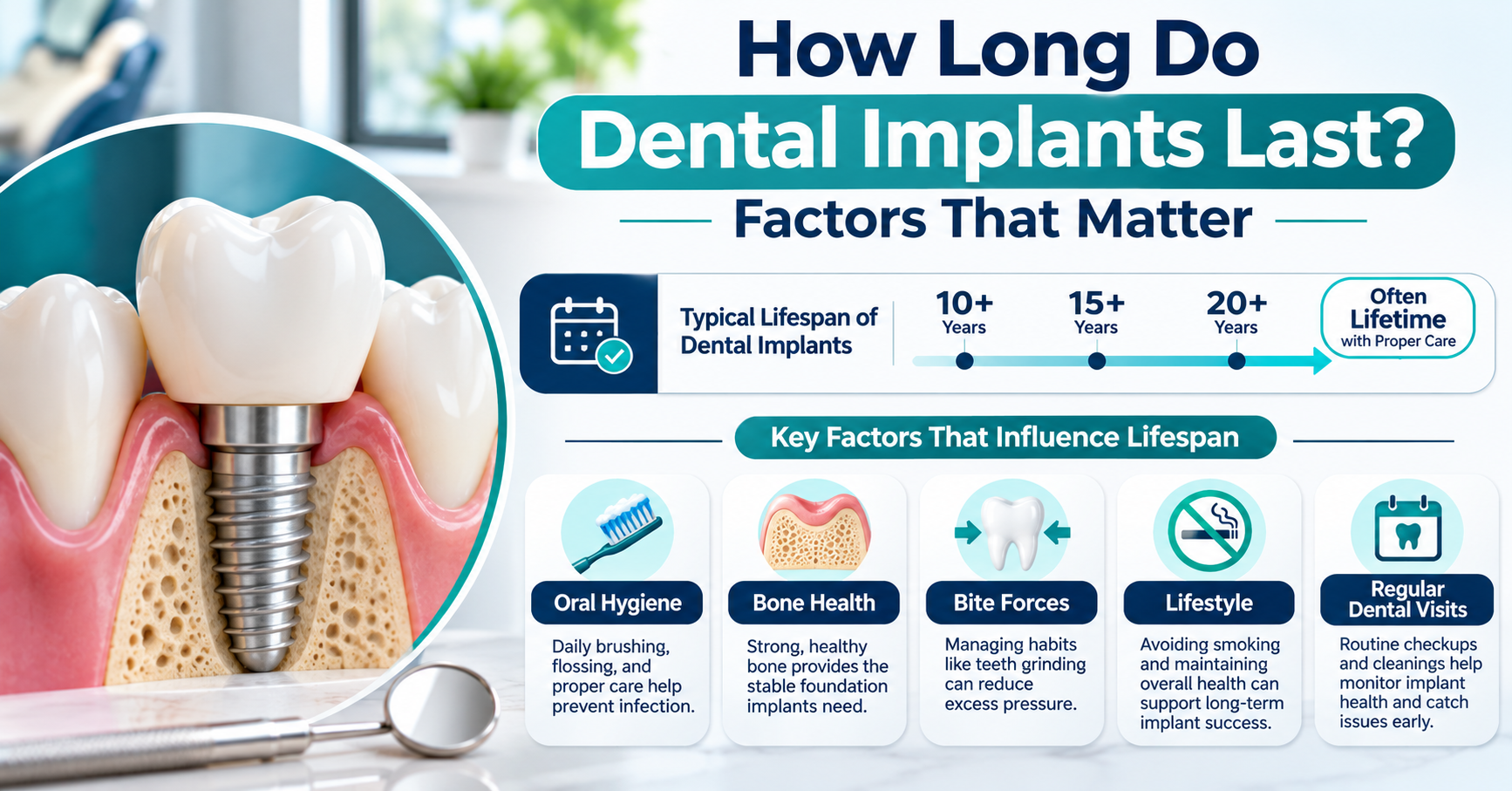
Dental implants can last 20 years or longer, and some remain functional throughout a patient's lifetime. However, lifetime success is not guaranteed. The implant itself and the artificial tooth attached to it have different lifespans.
The implant post is typically made from titanium and is designed to integrate with the jawbone. The dental crown attached to the implant may require replacement after approximately 10 to 15 years, depending on wear, oral hygiene, and chewing habits.
A dental implant typically consists of three main components. Each plays a different role in restoring the appearance and function of a missing tooth.
Implant Post: A small fixture placed within the jawbone to act as an artificial tooth root.
Abutment: A connecting component that attaches the replacement tooth to the implant post.
Dental Crown: The visible artificial tooth designed to restore appearance and chewing function.
While the implant post may remain stable for decades, the crown and connecting components can experience wear or damage over time. Replacing a worn crown does not necessarily mean the entire implant needs replacement.
Patients considering Dental implants Goldsboro NC should understand that successful tooth replacement involves more than the initial procedure. Consistent maintenance and professional monitoring are important for protecting the implant and surrounding tissues.
Several factors influence how well an implant performs over the years. Some depend on the patient's health, while others relate to treatment planning and everyday habits.
Although dental implants cannot develop cavities like natural teeth, the surrounding gums and bone remain vulnerable to bacterial buildup. Poor oral hygiene can contribute to inflammation and infection around the implant.
Brushing twice daily, cleaning between teeth, and using appropriate implant-cleaning tools can help reduce plaque accumulation. Consistent daily maintenance is essential for protecting the tissues that support the implant.
A healthy jawbone provides the foundation needed to support a dental implant. After placement, the implant gradually integrates with the surrounding bone through a process called osseointegration.
Insufficient bone density may affect implant stability. In some cases, additional procedures may be recommended before implant placement to create a suitable foundation. A thorough dental evaluation helps determine whether the jawbone can adequately support treatment.
Healthy gums help protect the tissues surrounding dental implants. When bacteria accumulate around an implant, inflammation may develop and potentially progress into peri-implantitis, a condition associated with supporting bone loss.
Regular examinations and appropriate Periodontal (Gum) Care can help identify inflammation and address gum-related concerns before they become more serious. Maintaining healthy surrounding tissues is an important part of long-term implant stability.
Smoking can interfere with blood circulation, tissue healing, and the body's response to infection. These effects may increase the risk of complications during implant healing and throughout its lifespan.
Reducing or quitting tobacco use can support healthier gums and improve the conditions needed for successful implant treatment.
Habitual teeth grinding or clenching can place additional stress on dental implants and their attached restorations. Over time, excessive pressure may contribute to crown damage, loose components, or other mechanical complications.
Patients who grind their teeth should discuss this habit with their dentist. A professionally recommended night guard may help protect natural teeth and implant-supported restorations.
Certain medical conditions can influence healing and implant success. Poorly controlled diabetes, for example, may increase the risk of infection and affect tissue recovery.
Sharing your complete medical history with your dentist allows for appropriate treatment planning. Managing existing health conditions and following professional recommendations can support better long-term outcomes.
The months following implant placement are particularly important because the implant needs time to integrate with the jawbone. During this period, patients should follow their dentist's instructions regarding food choices, oral hygiene, and physical activity.
Putting excessive pressure on an implant before adequate healing may interfere with its stability. Recovery timelines vary depending on bone quality, individual healing, and whether additional procedures were performed.
Attending scheduled follow-up appointments allows the dentist to monitor healing and determine when the implant is ready to support its final restoration.
Although dental implants are generally a reliable tooth replacement option, complications can occur. Implant failure may develop during the initial healing period or several years after placement.
Common contributing factors include infection, inadequate bone integration, progressive bone loss, excessive chewing pressure, and poorly controlled medical conditions.
Patients should pay attention to the following warning signs:
Persistent pain around the implant.
Swollen or bleeding gums.
Difficulty chewing comfortably.
Movement of the implant or attached crown.
Gum recession around the implant.
Persistent unpleasant taste or discharge.
These symptoms do not always indicate implant failure, but they require professional evaluation. Early assessment may help prevent further damage and identify suitable treatment options.
Routine dental appointments allow professionals to examine implant stability, gum condition, bite alignment, and the condition of the artificial tooth. Some complications may develop gradually without noticeable pain, making professional monitoring particularly valuable.
Regular checkups through General Dentistry also help identify plaque accumulation, restoration wear, and other oral health concerns that could affect implant performance.
Professional cleaning and individualized maintenance recommendations can help patients protect their implants while maintaining the health of their remaining natural teeth.
Small daily decisions can make a meaningful difference in the long-term condition of dental implants.
Brush consistently: Use a soft-bristled toothbrush to clean around the implant and gumline.
Clean between teeth: Use suitable interdental cleaning products recommended by your dentist.
Avoid chewing hard objects: Biting ice, pens, or hard objects may damage the artificial crown.
Maintain a balanced diet: Adequate nutrition supports general health and healthy oral tissues.
Avoid tobacco products: Reducing tobacco exposure can support gum health and healing.
Schedule regular checkups: Professional examinations help identify potential complications early.
Developing these habits can help maintain implant function and reduce the likelihood of avoidable problems.
Can dental implants last a lifetime?
Dental implant posts can remain functional for decades and may last a lifetime in some patients. However, their longevity depends on oral health, bone stability, lifestyle habits, and ongoing maintenance.
Do dental implants need replacement after 10 years?
Not necessarily. The artificial crown may eventually require replacement because of normal wear, while the implant post can remain stable for considerably longer.
Can dental implants develop cavities?
Implants cannot develop cavities because they are made from artificial materials. However, bacteria can still affect the surrounding gums and supporting bone.
Can I eat normally with dental implants?
Once healing is complete and the final restoration is placed, most patients can enjoy a wide variety of foods. Avoiding excessively hard objects can help protect the restoration.
How often should dental implants be checked?
Many patients benefit from dental examinations every six months. However, individuals with gum problems or other risk factors may require more frequent professional monitoring.
Dental implants can provide a durable and functional solution for missing teeth, but their longevity depends on several important factors. Healthy gums, sufficient bone support, consistent oral hygiene, responsible lifestyle choices, and regular dental examinations all contribute to long-term implant performance. Understanding these factors helps patients make informed decisions and protect their restored smiles.
EverSmile Dental focuses on personalized tooth replacement solutions and long-term oral health. By evaluating individual dental needs, bone condition, and treatment suitability, the dental team helps patients understand their options and maintain their restorations. With appropriate treatment planning and consistent follow-up care, patients can work toward a comfortable, functional, and healthy smile.