Latest Updates Click Here


How Cloud-Native MVP Architecture Supports Faster Product Development
Learn how cloud-native MVP architecture enables faster product launches, seamless scalability, continuous deployment, and efficient development for startups and enterprises.
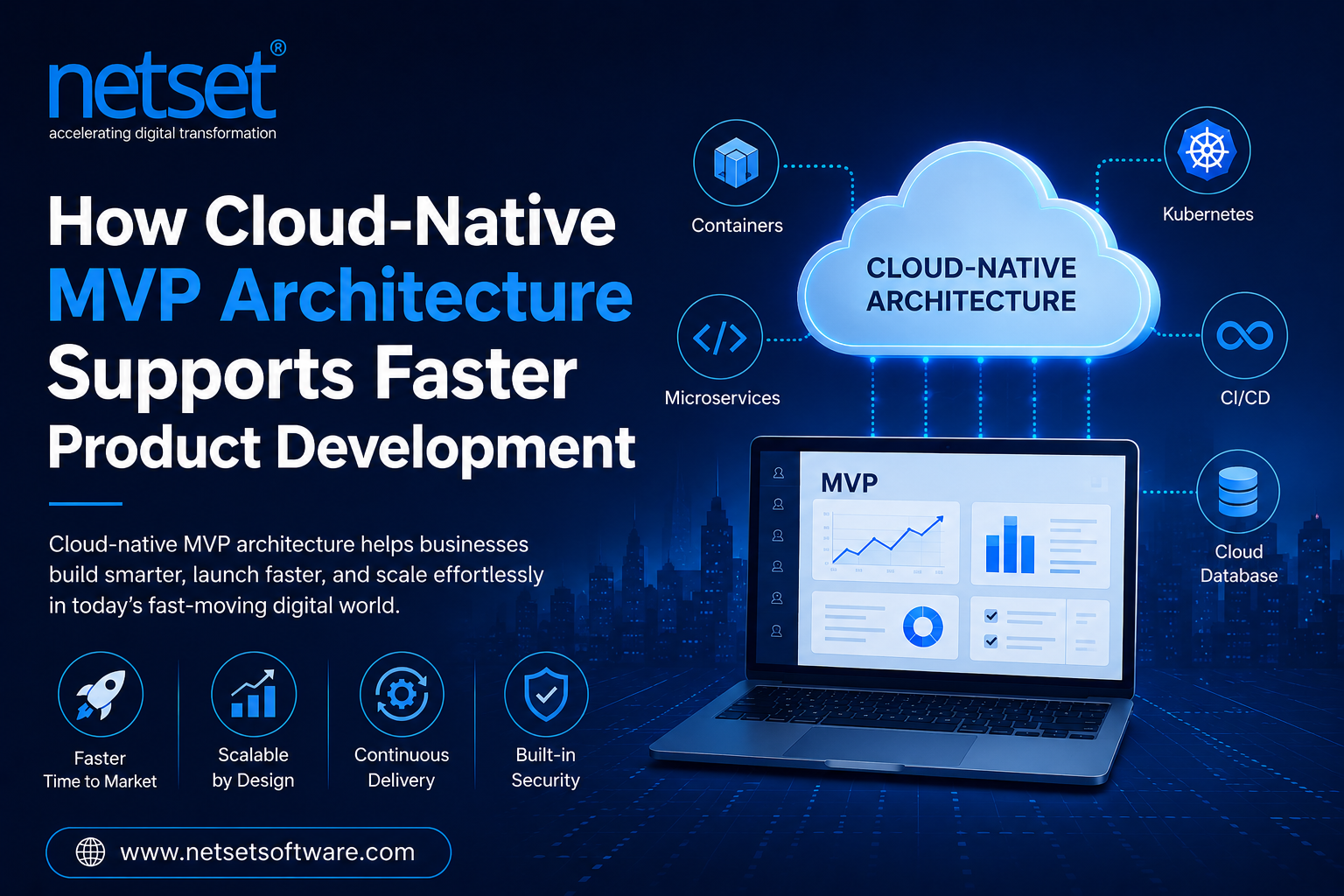
Bringing a new product to market has never been more competitive. Whether you're building a SaaS platform, an AI-powered application, or an enterprise solution, speed often determines success. However, launching quickly shouldn't come at the cost of quality or scalability. This is where cloud-native MVP architecture is changing the way modern digital products are built.
Businesses no longer need to invest months in developing a feature-rich application before understanding whether customers actually want it. Instead, they can launch a Minimum Viable Product (MVP), gather real user feedback, and improve the product continuously. When this approach is combined with cloud-native technologies, development becomes faster, more flexible, and far more cost-effective.
For startups and enterprises looking to partner with an experienced MVP development company, understanding cloud-native architecture is an important first step toward building products that are ready for long-term growth.
Understanding Cloud-Native MVP Architecture
A Minimum Viable Product is the simplest version of a product that delivers its core value to users. Rather than building every planned feature, businesses focus on solving one primary problem and validating their idea in the real market.
Cloud-native architecture complements this approach by using cloud infrastructure and modern development practices instead of traditional server-based environments. Applications are designed to run efficiently on cloud platforms, making them easier to build, deploy, update, and scale.
Unlike conventional software development, where infrastructure often becomes a bottleneck, cloud-native applications are created with flexibility in mind. Technologies such as containers, microservices, Kubernetes, and CI/CD pipelines enable development teams to deliver updates frequently while maintaining stability.
The combination of cloud-native technologies and MVP product development allows businesses to launch sooner without sacrificing future scalability.
Why Traditional Development Often Slows Product Launches
Many organizations still follow a traditional development model where every feature is planned and built before the product reaches users. While this may appear comprehensive, it often leads to longer development cycles, higher costs, and greater business risk.
A product can spend several months or even a year in development, only for businesses to discover that customer expectations have changed. By that point, making major adjustments becomes expensive and time-consuming.
Cloud-native MVP architecture follows a different philosophy. Instead of aiming for perfection before launch, it encourages businesses to release a functional product quickly, learn from user behavior, and improve it through continuous iterations. This reduces uncertainty and ensures development efforts are aligned with actual customer needs.
How Cloud-Native Architecture Accelerates Product Development
One of the biggest advantages of cloud-native development is its ability to eliminate unnecessary delays throughout the software lifecycle.
Development environments can be created within minutes instead of days. Automated deployment pipelines reduce manual work, allowing developers to push updates safely and frequently. Since applications are hosted on scalable cloud infrastructure, businesses no longer need to worry about purchasing or maintaining physical servers before launching their products.
Cloud-native platforms also support continuous integration and continuous deployment (CI/CD). Every code change is automatically tested, verified, and deployed, significantly reducing errors while shortening release cycles.
This means development teams spend less time managing infrastructure and more time improving the product itself.
Scalability Without Rebuilding the Application
One common challenge for growing businesses is outgrowing their initial technology stack. Applications built using traditional architectures often require significant redevelopment once user traffic increases.
Cloud-native architecture is designed differently.
Applications are built to scale automatically based on demand. Whether a product serves a few hundred users or millions, cloud infrastructure can allocate additional resources without affecting performance.
This flexibility is especially valuable for startups. Rather than investing heavily in infrastructure before growth happens, businesses pay only for the resources they use. As customer demand increases, the application grows alongside it without requiring major architectural changes.
This approach makes MVP development services more practical for businesses looking to expand quickly while controlling operational costs.
Faster Feedback Leads to Better Products
Launching an MVP is only the beginning of a product's journey. The real value comes from understanding how users interact with the application and making informed improvements.
Cloud-native environments make this process much easier by integrating analytics, monitoring tools, and automated deployments directly into the development workflow.
Instead of waiting months to introduce new features, development teams can release small improvements every week or even every day. This continuous feedback loop allows businesses to identify usability issues, remove unnecessary features, and prioritize enhancements based on real customer behavior rather than assumptions.
Products built this way evolve naturally according to market demand, increasing their chances of long-term success.
Improved Reliability and Security
Modern users expect applications to be available whenever they need them. Downtime not only affects customer satisfaction but can also damage a company's reputation.
Cloud-native architecture improves reliability through built-in redundancy, automatic backups, and intelligent monitoring systems. If one service encounters an issue, other parts of the application continue operating without interruption.
Security is another significant advantage. Leading cloud platforms provide encryption, identity management, network security, automated backups, and continuous monitoring. These capabilities help development teams maintain secure environments without spending excessive time configuring infrastructure manually.
For industries such as healthcare, fintech, and enterprise software, these built-in security features make cloud-native architecture an increasingly attractive choice.
Cloud-Native Architecture Supports Continuous Innovation
Markets evolve quickly, and businesses need products that can adapt just as fast.
Cloud-native applications make innovation easier because individual components can be updated independently. Developers can introduce new functionality, test different user experiences, or integrate third-party services without affecting the entire application.
This modular approach reduces development risks while allowing businesses to respond faster to changing customer expectations.
Whether adding AI capabilities, integrating payment gateways, or expanding into new markets, cloud-native systems provide the flexibility needed for continuous product evolution.
Industries Benefiting from Cloud-Native MVP Development
Cloud-native MVP architecture is widely adopted across industries because it enables businesses to launch products faster, scale efficiently, and adapt to evolving customer needs. Here are some of the key sectors benefiting from this approach:

-
Healthcare: Build secure patient portals, telemedicine platforms, appointment systems, and healthcare management solutions with the flexibility to scale as user demand grows.
-
FinTech: Develop digital payment platforms, lending solutions, investment apps, and banking applications with strong security, compliance, and high availability.
-
Retail & eCommerce: Launch online stores, marketplaces, and omnichannel shopping experiences that can easily handle seasonal traffic spikes and growing customer bases.
-
SaaS: Quickly introduce cloud-based software products, gather user feedback, and continuously release new features without disrupting existing services.
-
Logistics & Supply Chain: Create real-time shipment tracking, warehouse management, fleet monitoring, and inventory solutions that integrate seamlessly with third-party systems.
-
EdTech: Develop scalable eLearning platforms, virtual classrooms, online assessment tools, and student management systems for growing user communities.
-
Real Estate: Build property listing platforms, virtual tour applications, CRM systems, and property management solutions that support seamless user experiences.
-
Manufacturing: Deploy smart factory solutions, production monitoring systems, predictive maintenance platforms, and IoT-enabled applications to improve operational efficiency.
Regardless of the industry, the goal remains the same: accelerate product launches, reduce development costs, and build scalable digital solutions that can evolve with changing business needs.
Choosing the Right Development Partner
Technology is only one part of successful product development. Experience, planning, and execution play equally important roles.
When selecting an MVP development company, businesses should look beyond technical skills alone. A reliable partner should understand product strategy, user experience, cloud architecture, security, and long-term scalability.
The best development teams focus on solving business challenges rather than simply building software. They help identify essential features, recommend the right technology stack, and create a roadmap that supports future growth without unnecessary complexity.
How NetSet Software Helps Businesses Build Future-Ready MVPs
Building an MVP isn't just about launching quickly it's about creating a product that can evolve with your business. At NetSet Software, we combine modern cloud-native technologies with agile development practices to help startups and enterprises transform ideas into scalable digital products. Our team emphasizes performance, security, flexibility, and user experience throughout the development process, ensuring businesses can validate concepts faster while staying prepared for future growth.
Conclusion
Cloud-native MVP architecture has fundamentally changed how successful digital products are developed. By combining cloud infrastructure with agile methodologies, businesses can shorten development cycles, reduce operational costs, and respond quickly to changing market needs.
Rather than spending months building a product based on assumptions, organizations can launch faster, gather meaningful customer feedback, and improve continuously. This approach minimizes risk while creating a strong foundation for future expansion.
As digital competition continues to grow, investing in scalable MVP product development is no longer just a technical decision it's a strategic business advantage. Partnering with an experienced provider of MVP development services can help businesses move from concept to market faster while building products that remain flexible, reliable, and ready for long-term success.
Share On :
Tweet | LinkedIn | |