Latest Updates Click Here


Which Construction Chemicals Are Used in Modern Building Projects
Modern building projects rely on construction chemicals for durability, strength, waterproofing, bonding, and long-lasting performance across structures.
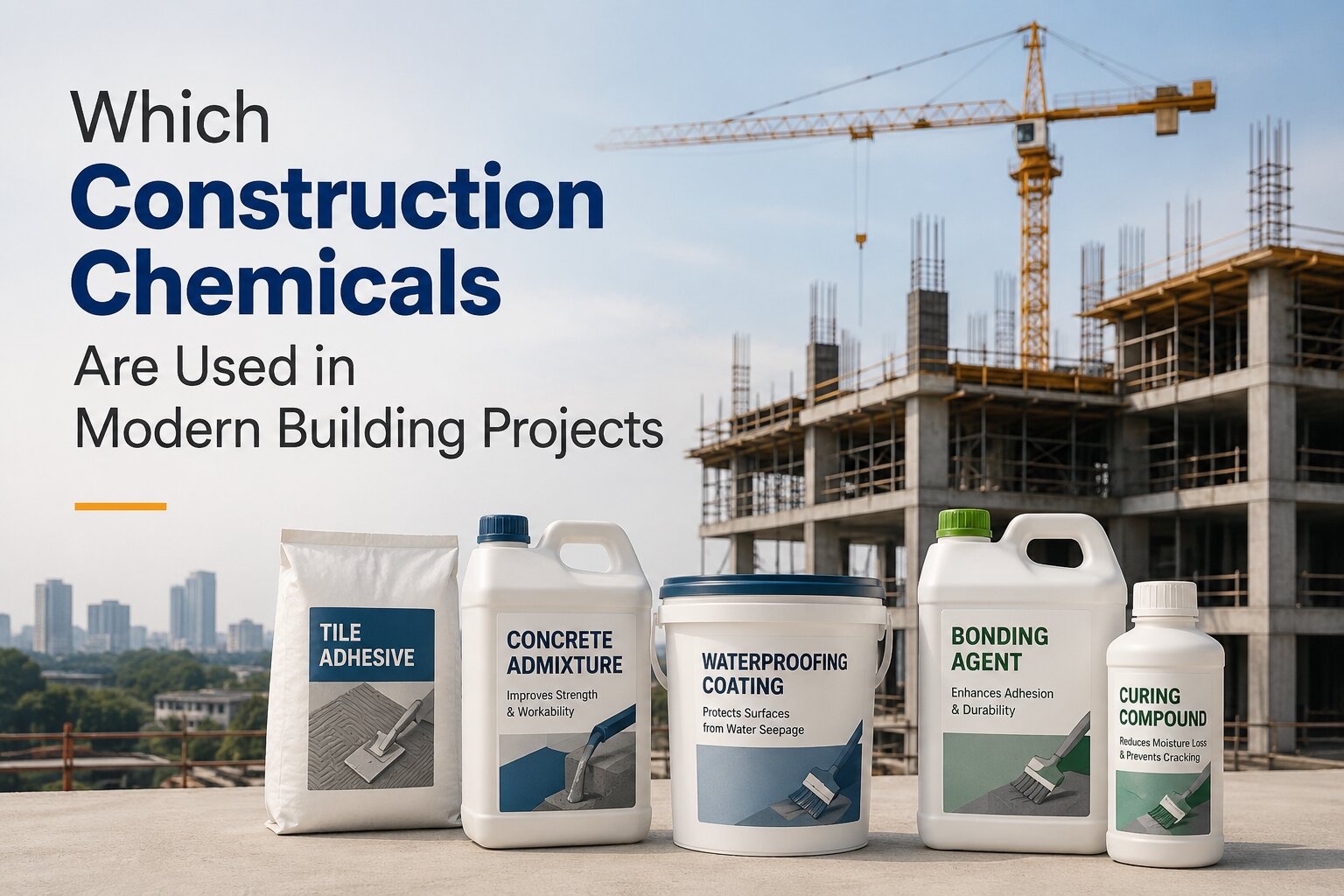
Modern building projects rely on more than traditional materials such as cement, sand, steel, and concrete. As construction standards continue to evolve, specialized chemical solutions are increasingly used to improve concrete performance, strengthen material bonding, control setting times, protect surfaces, and increase resistance to moisture and environmental exposure. The growth of chemical industries in Pakistan has also helped make a wider selection of construction-focused materials available to builders, contractors, engineers, and manufacturers.
From concrete additives and polymer-based solutions to protective coatings and bonding materials, these chemical solutions serve specific purposes throughout the construction process. Selecting the right material for each application can help improve project efficiency, durability, and long-term structural performance.
How Concrete Additives Support Modern Construction
Concrete additives play an important role in modern construction because they can modify the properties of concrete and cement-based mixtures according to project requirements. They may be used to improve workability, control setting time, reduce water requirements, or support strength development.
These materials are particularly valuable in large construction projects where concrete must remain workable during transportation and placement. They can also be useful when construction takes place under challenging weather conditions or when a project requires specialized performance characteristics.
Common applications include:
- Improved Concrete Workability: Specialized additives can make concrete easier to mix, transport, place, and finish during demanding construction operations.
- Controlled Setting Time: Certain chemical solutions help manage the setting process, giving workers more time for placement during large-scale concrete applications.
- Reduced Water Requirements: Water-reducing materials can lower the amount of water needed while maintaining suitable concrete flow and workability.
- Better Structural Performance: Properly selected additives can support strength development and improve the durability of concrete throughout its service life.
- Greater Construction Efficiency: Chemical modification can help contractors achieve required concrete properties without significantly changing the basic mix design.
These advantages make chemical additives valuable for foundations, slabs, bridges, roads, precast components, commercial buildings, and infrastructure projects.
Why Epoxy-Based Materials Are Important for Construction
Epoxy-based materials are widely used where strong adhesion, durability, and resistance to demanding conditions are required. Their ability to bond effectively with different surfaces makes them useful in construction, repair, flooring, and protective coating applications.
They can be applied to concrete and other substrates to provide additional protection against physical wear, moisture, and chemical exposure. Their use is especially relevant in industrial environments where floors, walls, tanks, and other surfaces may experience heavy traffic or contact with aggressive substances.
Common Construction Applications
Epoxy-based systems can support several important construction requirements:
- Structural Repair Work: Epoxy formulations can provide strong bonding for repairing cracks, damaged concrete, and other structural components.
- Industrial Flooring: Durable resin-based flooring systems can withstand heavy foot traffic, machinery movement, abrasion, and demanding working conditions.
- Protective Surface Coatings: Epoxy coatings can create durable barriers that help protect concrete and metal surfaces from moisture and chemical exposure.
- Chemical-Resistant Applications: Specialized formulations can be selected for areas where surfaces may come into contact with fuels, solvents, acids, or other chemicals.
- Concrete Bonding: Epoxy materials can improve adhesion between different construction surfaces when strong and durable bonding is required.
The performance of an epoxy system depends on factors such as formulation, curing conditions, substrate preparation, and the intended application. Proper technical selection is therefore essential.
The Role of Polymer Powders in Cement-Based Materials
Polymer powders are commonly incorporated into dry-mix construction materials to improve their performance after mixing with water. They can contribute to better adhesion, flexibility, water resistance, and durability in cementitious formulations.
These materials are particularly useful in applications where conventional cement-based products may require additional flexibility or bonding strength. They can help construction materials perform more effectively when exposed to movement, moisture, temperature variations, and everyday wear.
Polymer-modified formulations are commonly used in:
- Tile Adhesive Systems: Polymer modification can improve adhesion and flexibility, helping tiles remain securely bonded to different substrates.
- Repair Mortars: Polymer additives can improve bonding and flexibility, supporting durable repairs on damaged or deteriorated surfaces.
- External Renders: These materials can contribute to better adhesion and resistance against environmental exposure on exterior building surfaces.
- Waterproofing Mortars: Polymer modification can improve water resistance and flexibility in systems designed to protect moisture-sensitive structures.
- Self-Leveling Materials: Certain formulations help improve flow and surface consistency when creating smooth and even flooring applications.
The correct grade should be selected according to the specific application, required performance, substrate characteristics, and environmental conditions.
How Rubber-Based Modifiers Improve Construction Performance
Rubber-based modifiers are used in construction formulations where flexibility, bonding, abrasion resistance, and water resistance are important. They can modify traditional cement-based materials and improve their ability to perform under movement and environmental stress.
These solutions are particularly useful for repair and waterproofing applications where rigid materials may not provide sufficient flexibility.
Key benefits include:
- Improved Flexibility: Rubber-based modifiers can help construction materials accommodate minor movement and reduce the risk of premature cracking.
- Stronger Material Bonding: They can improve adhesion between repair materials and existing surfaces, supporting more reliable renovation work.
- Better Water Resistance: Modified formulations can provide additional protection against moisture penetration in exposed construction areas.
- Greater Abrasion Resistance: These materials can improve surface durability in flooring and other applications exposed to repeated wear.
- Enhanced Repair Performance: Their flexibility and bonding characteristics make them suitable for concrete repairs, screeds, and resurfacing work.
Their use can be particularly beneficial in areas where structures are exposed to changing temperatures, humidity, water, or regular mechanical stress.
Protective Polymer Solutions for Exterior Surfaces
Exterior surfaces face continuous exposure to sunlight, rain, humidity, temperature fluctuations, and airborne contaminants. Protective polymer solutions are therefore used to improve the durability and performance of paints, coatings, waterproofing systems, and other surface treatments.
These materials can provide a balance of flexibility, adhesion, and resistance to environmental conditions. Depending on the formulation, they may be incorporated into protective coatings, waterproofing membranes, exterior paints, and construction emulsions.
Where Exterior Protection Matters
Protective polymer systems can be particularly useful for:
- Building Facades: Exterior polymer coatings can help protect surfaces against moisture and weather-related deterioration.
- Waterproofing Systems: Flexible polymer-based formulations can help reduce water penetration and protect moisture-sensitive areas.
- Exterior Paints: Polymer technology can improve adhesion and contribute to longer-lasting finishes on exposed building surfaces.
- Protective Coatings: Specialized coatings can provide additional resistance against environmental exposure and everyday surface wear.
Choosing the appropriate formulation depends on the substrate, expected exposure, application method, and performance requirements of the project.
Choosing the Right Chemical Solution for Each Project
Every construction project has different technical requirements. A material suitable for improving concrete workability may not be appropriate for surface protection, while a bonding solution designed for repairs may not be suitable for exterior coatings.
Before selecting a construction chemical, project teams should evaluate several factors:
| Project Requirement | Chemical Solution Category | Typical Purpose |
| Concrete workability | Concrete additives | Improve flow and handling during placement |
| Water reduction | Water-reducing solutions | Lower water demand while maintaining workability |
| Strong bonding | Epoxy-based materials | Support repairs, coatings, and structural bonding |
| Flexible cement systems | Polymer powders | Improve adhesion, flexibility, and durability |
| Waterproofing | Polymer and rubber modifiers | Improve resistance against moisture penetration |
| Surface protection | Protective polymers | Support weather resistance and long-term durability |
The selection process should also consider dosage, compatibility with other materials, storage requirements, environmental exposure, and technical specifications.
Why Reliable Chemical Supply Matters for Construction
Large construction projects depend on a consistent supply of raw materials. A delay in receiving essential chemical materials can affect production schedules, application timelines, and overall project progress. This makes supplier reliability an important consideration when planning construction work.
Working with a construction chemicals supplier in Pakistan can help contractors, manufacturers, and project teams access materials suited to their specific requirements while receiving support with product selection and technical applications.
Important Factors When Selecting a Supplier
- Consistent Material Availability: A dependable supplier should be able to maintain suitable stock levels and support regular or bulk construction requirements.
- Technical Product Support: Professional guidance can help businesses select appropriate chemical solutions based on application requirements and project conditions.
- Reliable Quality Standards: Consistent chemical properties are important for maintaining predictable performance across different batches and construction applications.
- Flexible Supply Options: Suppliers should be able to support different order volumes, from smaller requirements to large-scale infrastructure projects.
- Timely Delivery Services: Efficient logistics can help prevent material shortages that may interrupt construction schedules or manufacturing operations.
A reliable supply partnership can contribute to smoother project execution and better material planning.
Where Construction Chemicals Are Used in Modern Projects
Construction chemicals are now used across residential, commercial, industrial, and infrastructure developments. Their applications extend from the early stages of concrete production to finishing, repair, waterproofing, and surface protection.
Common areas of use include:
- Residential Developments: Chemical solutions support concrete performance, tile installation, waterproofing, repairs, and protective surface treatments.
- Commercial Buildings: Offices, shopping centers, and public facilities use specialized materials for flooring, coatings, concrete, and surface protection.
- Industrial Facilities: Factories and warehouses often require durable flooring, chemical-resistant coatings, repair systems, and protective treatments.
- Infrastructure Projects: Bridges, roads, tunnels, and other major structures rely on materials designed to improve concrete performance and long-term durability.
- Renovation Projects: Specialized bonding, repair, waterproofing, and resurfacing materials help restore aging or damaged structures.
As construction methods become more advanced, the demand for specialized chemical solutions continues to grow across different project types.
How Proper Chemical Selection Can Improve Project Results
The correct use of construction chemicals can influence the performance, efficiency, and lifespan of a completed structure. However, achieving these benefits requires more than simply choosing a chemical based on price or availability.
Project teams should assess the intended application and understand how the selected material interacts with cement, concrete, polymers, coatings, or other components.
Important considerations include:
- Application Requirements: The chemical should match the specific purpose, whether the goal is bonding, waterproofing, concrete modification, or surface protection.
- Environmental Conditions: Temperature, humidity, moisture, chemical exposure, and mechanical stress should be considered before selecting a formulation.
- Material Compatibility: Chemical solutions should be compatible with the existing substrate and other components used within the construction system.
- Correct Dosage and Mixing: Following technical recommendations for dosage and preparation is essential for achieving consistent and reliable performance.
- Storage and Handling: Appropriate storage conditions help preserve material quality and prevent problems caused by moisture, heat, or improper handling.
Careful planning at the material selection stage can help reduce application problems, improve construction efficiency, and support longer-lasting results.
Frequently Asked Questions
Which types of construction chemicals are commonly used in modern projects?
Modern construction commonly uses concrete additives, epoxy-based materials, polymer powders, rubber-based modifiers, waterproofing solutions, bonding agents, and protective coating materials for different applications.
How do construction chemicals improve concrete performance?
Depending on their formulation, construction chemicals can improve concrete workability, reduce water requirements, control setting time, support strength development, and increase resistance to environmental conditions.
Why are polymer-based materials used in construction?
Polymer-based materials can improve properties such as adhesion, flexibility, water resistance, durability, and crack resistance, making them useful in mortars, tile adhesives, waterproofing, and protective coatings.
What should contractors consider before selecting construction chemicals?
Contractors should consider the intended application, substrate, environmental conditions, compatibility, dosage requirements, storage conditions, technical specifications, and expected performance before making a selection.
Can construction chemicals be used for repair and renovation work?
Yes, specialized chemical solutions are commonly used for concrete repairs, crack treatment, surface bonding, waterproofing, protective coatings, flooring systems, and other renovation applications.
Conclusion
Modern construction projects increasingly depend on specialized chemical solutions to achieve the performance, durability, and protection that conventional materials alone may not provide. Concrete additives can improve workability and control setting characteristics, while epoxy-based materials support strong bonding and surface protection. Polymer powders and rubber-based modifiers can add flexibility, adhesion, and water resistance, while protective polymer systems help exterior surfaces withstand demanding environmental conditions.
The most suitable solution depends on the project's application, environmental exposure, material compatibility, and technical requirements. By selecting appropriate construction chemicals and working with reliable suppliers, contractors, engineers, manufacturers, and developers can improve construction efficiency while supporting stronger and more durable structures.
Share On :
Tweet | LinkedIn | |