Learn how myopia control helps slow short-sightedness in children. Explore myopia control glasses, contact lenses, Ortho-K and treatment options at Optometrist Parramatta. Book an assessment today!
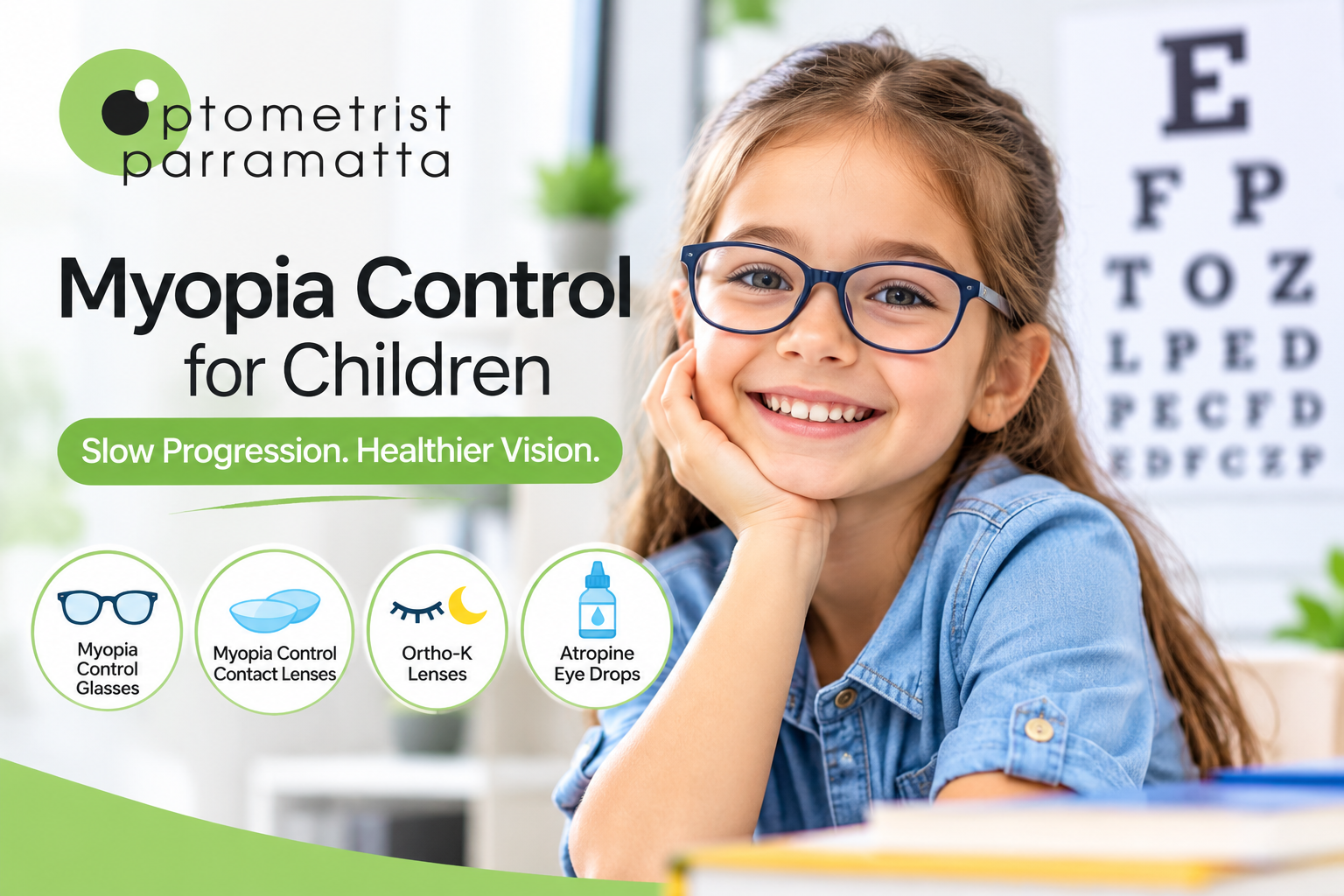
Myopia, commonly known as short-sightedness, is becoming increasingly common among children. Many parents notice that their child's glasses prescription increases every year, raising concerns about their long-term vision and eye health.
The good news is that myopia control offers several treatment options designed to slow the progression of short-sightedness during childhood. From specialised glasses and contact lenses to Orthokeratology (Ortho-K), these treatments can help manage eye growth and reduce the risk associated with high myopia later in life.
At Optometrist Parramatta, we provide personalised myopia assessments and management options to help children maintain healthy vision as they grow.
Myopia is a vision condition where distant objects appear blurry while close objects remain clear. It commonly develops between the ages of 6 and 12 and can continue progressing throughout the teenage years.
Myopia occurs when the eyeball grows longer than normal, causing light to focus in front of the retina rather than directly on it.
Regular prescription glasses correct blurred vision but do not necessarily slow the underlying eye growth.
Myopia control involves specialised treatments that aim to slow the progression of short-sightedness. Managing myopia early can help reduce the likelihood of developing high myopia, which is associated with an increased risk of retinal detachment, glaucoma and other eye complications.
There is no single treatment suitable for every child. The right option depends on age, prescription, progression rate, eye health and lifestyle.
Here are four commonly used treatment approaches.
Myopia control glasses look similar to regular prescription glasses but use specially designed lens technology to help slow eye growth.
They provide clear central vision while incorporating additional optical elements that help manage how light focuses inside the eye.
Benefits include:
Non-invasive and easy for children to wear.
No contact lens cleaning or handling required.
Suitable for younger children.
Convenient for everyday school and home activities.
How Do Myopia Control Glasses Work?
These glasses use specialised optical zones to correct distance vision while creating a peripheral defocus signal that helps slow eye elongation.
Parents often ask, do myopia control glasses work? Clinical research supports their effectiveness in slowing myopia progression, although individual results can vary.
Specialised soft contact lenses are another option for children with progressing myopia. These lenses correct distance vision while using specific optical designs to help manage eye growth.
Some options, such as MiSight contact lenses, are designed specifically for childhood myopia management.
Benefits include:
Greater convenience during sports and outdoor activities.
Clear vision without wearing frames.
Daily disposable options are available.
Suitable for children who can follow proper lens hygiene.
How Do Myopia Control Lenses Work?
These lenses use different focusing zones to provide clear central vision while directing peripheral light in a way that helps slow eye growth.
So, do myopia control lenses work? Evidence supports their use in managing childhood myopia, provided they are appropriately prescribed and monitored.
Orthokeratology, commonly called Ortho-K, uses specially designed rigid contact lenses worn overnight.
While your child sleeps, the lenses gently reshape the cornea. After removing them in the morning, children can generally enjoy clear daytime vision without glasses or contact lenses.
Ortho-K can also help slow myopia progression in suitable children.
Key advantages include:
Clear daytime vision without glasses.
No daytime contact lenses required.
Convenient for swimming and sporting activities.
Can form part of a myopia management plan.
However, Ortho-K requires careful cleaning, consistent overnight wear and regular professional monitoring.
Learn more about Ortho-K treatment in Parramatta.
Low-dose atropine eye drops may be recommended by an eye care professional to help slow myopia progression.
They are generally used once daily, often at bedtime, depending on the prescribed treatment plan.
Some children may experience mild light sensitivity or difficulty focusing on close objects. Your optometrist will assess suitability and monitor the response.
Atropine may also be considered alongside optical treatments in selected cases.
Alongside professional treatment, healthy daily habits can support children's eye health.
Consider encouraging your child to:
Spend approximately two hours outdoors each day where practical.
Take regular breaks during reading and screen activities.
Maintain a comfortable distance when using digital devices.
Attend regular comprehensive eye examinations.
Follow their prescribed myopia management routine.
These habits support eye health but should not replace professional myopia treatment.
Managing myopia early can make an important difference to your child's long-term eye health. Specialised glasses, contact lenses, Ortho-K and prescribed atropine drops offer different approaches depending on individual needs.
At Optometrist Parramatta, we provide comprehensive Child Myopia 360° Exams to assess vision, monitor progression and discuss suitable treatment options.
Our experienced optometrists have been caring for local families for almost 40 years. Visit us at 9A/103 George Street, Parramatta NSW 2150.
Book a comprehensive 360° eye test or call 02 9891 2020 to discuss your child's vision needs.
Myopia management should be considered as soon as short-sightedness is diagnosed and progression is identified. Early assessment allows an optometrist to recommend suitable treatment options.
Yes. Specialised myopia control glasses have been shown to slow myopia progression in children compared with standard single-vision glasses. Results vary between individuals.
Yes. Specialised contact lenses, including multifocal and dual-focus designs, can help slow myopia progression when prescribed and monitored appropriately.
They use specially designed optical zones to correct distance vision while creating peripheral defocus signals that help manage the eye's growth.
They combine central vision correction with additional focusing zones that help reduce the signals associated with excessive eye elongation.
Most options can be used safely when prescribed by a qualified optometrist and monitored regularly. Contact lenses and Ortho-K require appropriate hygiene and handling.
No. Myopia control treatments aim to slow progression rather than reverse existing short-sightedness. The goal is to help reduce the final level of myopia as the child grows.