Modern construction projects require careful planning, suitable equipment, and effective coordination between different teams. 3D Concrete Printing Project Planning helps builders understand how automated concrete printing fits into their construction goals. From preparing digital designs to arranging site utilities, every stage requires attention before the printing equipment arrives.
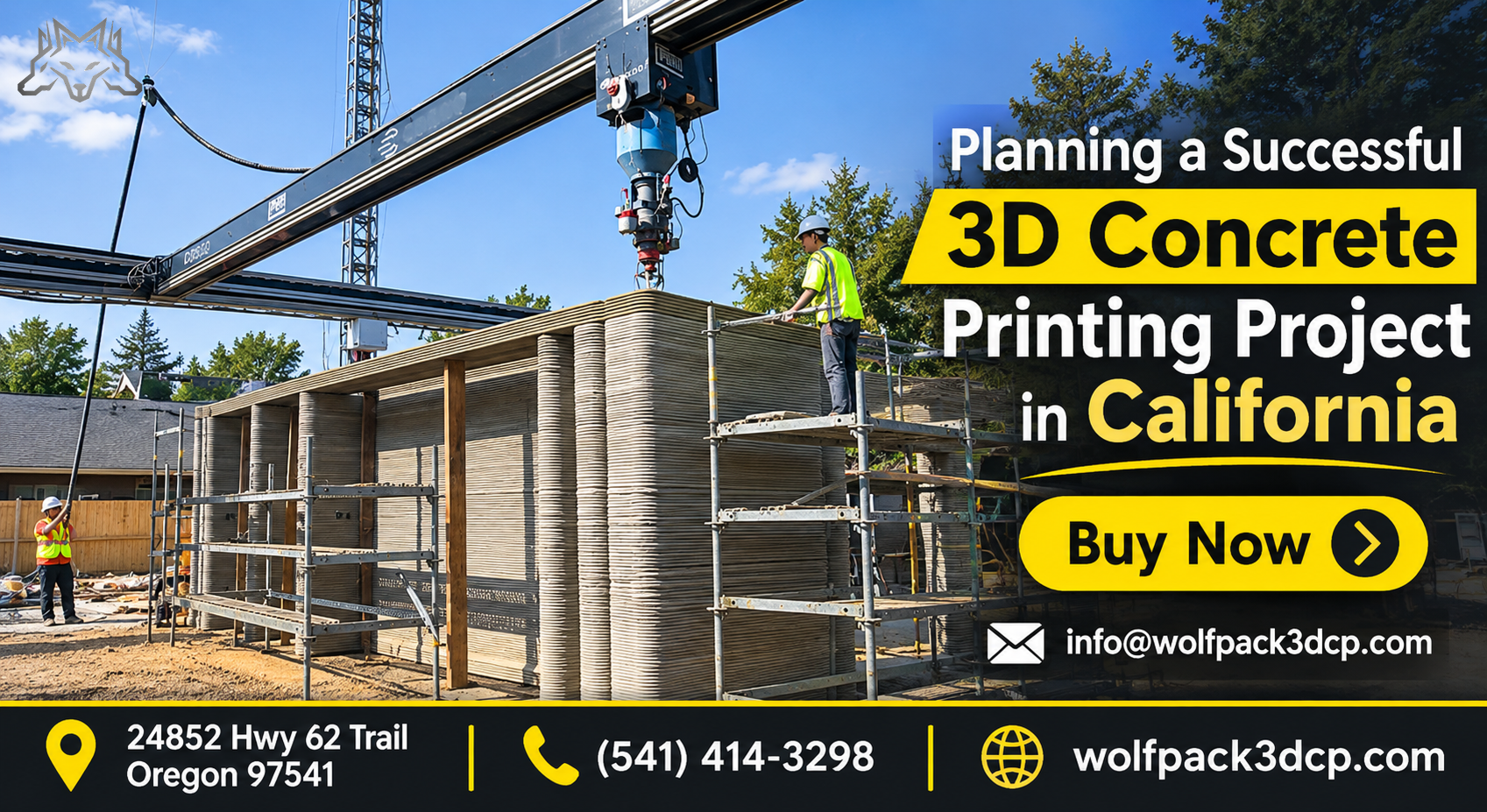
Modern construction projects require careful planning, suitable equipment, and effective coordination between different teams. 3D Concrete Printing Project Planning helps builders understand how automated concrete printing fits into their construction goals. From preparing digital designs to arranging site utilities, every stage requires attention before the printing equipment arrives.
Concrete 3D printing uses robotic equipment to place cement-based material in successive layers. This process can support selected wall structures, customized designs, and architectural applications. For construction companies in California, understanding the planning process can help determine whether this technology is appropriate for a particular project.
Concrete 3D printing involves more than operating a robotic machine. The project team must coordinate the design, materials, equipment, labor, and construction site before printing begins.
Proper planning helps contractors:
Identify whether the proposed design suits the printing equipment.
Prepare the construction area before equipment delivery.
Arrange the required materials and utilities.
Coordinate labor and operator responsibilities.
Review permits, inspections, and safety requirements.
Establish a realistic project schedule.
Without proper preparation, unexpected site or design issues can affect the printing process.
The first step is to establish what the construction team wants to produce using concrete 3D printing.
Builders should identify the intended structure, approximate dimensions, wall geometry, and project location. They should also determine whether the printing process will produce complete wall sections or selected building components.
A clearly defined scope makes it easier to discuss equipment capabilities, material requirements, and project costs with a rental provider.
Concrete printing follows a digital model that guides the printer's movement. Therefore, the design must match the capabilities of the selected equipment.
Architects, engineers, and designers should review:
Wall dimensions and geometry
Printing paths and layer arrangements
Openings and architectural features
Material requirements
Structural design considerations
Equipment compatibility
Not every architectural design can be printed with every machine. A technical review helps identify limitations before the project moves to the printing stage.
Choosing the right equipment is an important part of project planning. Different printers have different operating capabilities, configurations, and material requirements.
A concrete printing setup may include a robotic printer, material pump, continuous mixer, and operator support.
Construction companies should consider the following questions before selecting equipment:
Does the printer support the proposed design?
What supporting machinery is required?
Is a trained operator included?
What site space is needed?
How will material reach the printer?
What are the equipment setup requirements?
Reviewing these details helps contractors choose a suitable rental arrangement.
Site preparation plays an important role in concrete printing operations. The printing area should provide a stable, level surface and enough space for the equipment and workers.
Contractors should arrange:
Level printing surface: Prepare a suitable surface according to the equipment requirements.
Site access: Make sure the printer, mixer, and pump system can reach the designated work area.
Power supply: Arrange stable power access as required by the equipment.
Water supply: Confirm suitable water availability for material preparation and other operational needs.
Working space: Provide sufficient room for workers, material handling, and equipment movement.
The rental provider should confirm the specific site requirements before the scheduled printing date.
Although concrete printing uses automated equipment, the construction site still requires human support.
Workers may assist with material handling, site coordination, and general construction activities. The client should also arrange site supervision and follow appropriate safety procedures.
For the Scara Elite Roadrunner rental package offered by WolfPack 3DCP, the client must provide at least two general laborers. The rental package includes a certified WolfPack operator who handles equipment setup, calibration, and safe operation.
Clearly defining responsibilities before the project starts helps avoid confusion during printing.
The material used in concrete printing must work with the selected equipment and intended application.
Material consistency, workability, layer stability, and setting characteristics are important considerations. The construction team should coordinate with the equipment provider to confirm the appropriate material specifications.
Builders should also estimate the quantity of material required based on the digital design and project dimensions. This information can support purchasing decisions and project budgeting.
Construction regulations remain important when using automated printing equipment. Concrete 3D printing does not remove the need to meet applicable building codes or obtain required approvals.
Before starting, contractors should:
Confirm local permit requirements.
Coordinate with relevant building authorities.
Arrange necessary inspections.
Obtain appropriate insurance documentation.
Establish site safety procedures.
Review engineering and structural requirements.
The client should confirm these responsibilities with the rental provider and relevant construction professionals before mobilization.
Project costs depend on several factors, so contractors should avoid relying on a single general estimate.
Common cost considerations include:
Equipment rental: The printer and supporting machinery required for the project.
Operator support: The technical assistance included in the rental arrangement.
Printing materials: The quantity and type of compatible material needed.
Site preparation: Work required to prepare the printing surface and equipment area.
Labor: General workers and construction support provided by the client.
Transportation and setup: Equipment delivery, mobilization, and related arrangements.
Project complexity: Design requirements, printing duration, and site conditions.
Builders should provide accurate project information when requesting a quote. This allows the rental provider to review the scope and identify the equipment and services required.
Some issues can be prevented by reviewing project requirements early.
Ignoring equipment limitations: A design should be checked against the selected printer's capabilities before printing.
Poor site preparation: An unsuitable or uneven printing surface can create operational difficulties.
Underestimating material needs: Material quantities should be evaluated using the project design and equipment requirements.
Unclear responsibilities: The client and rental provider should understand their respective duties for labor, supervision, equipment operation, and site preparation.
Overlooking regulations: Permits, inspections, insurance, and structural approvals should be considered during the planning stage rather than after equipment arrives.
Construction companies planning a concrete printing project in Southern California can review the rental services available through WolfPack 3DCP.
The company offers the Scara Elite Roadrunner for rental with a certified operator, pump system, and continuous mixer. This package gives builders access to specialized equipment for suitable construction applications without requiring them to purchase the entire printing system.
Before arranging a rental, contractors should review the project design, site conditions, labor requirements, utilities, and other responsibilities.
For equipment information and rental requirements, visit WolfPack 3DCP's 3D concrete printer rental page.
What is the first step in planning a concrete 3D printing project?
The first step is defining the project scope. Builders should identify the structure, dimensions, design requirements, and intended application before selecting equipment.
Does concrete 3D printing require a digital design?
Yes. The printer follows digital instructions to control its movement and deposit material in the planned pattern. The design must be compatible with the selected equipment.
How should a construction site be prepared for concrete printing?
The site should have a suitable level printing surface, sufficient working space, equipment access, stable power, and an appropriate water supply.
Does a concrete printer rental include labor support?
Rental arrangements vary. WolfPack 3DCP's Scara Elite Roadrunner rental package includes a certified operator, while the client must provide at least two general laborers.
Can every construction project use 3D concrete printing?
No. Suitability depends on the design, structural requirements, materials, equipment capabilities, site conditions, and applicable building regulations. A technical review is recommended before selecting this construction method.
3D Concrete Printing Project Planning helps construction teams prepare for automated concrete printing by addressing design compatibility, equipment selection, material requirements, site preparation, and regulatory responsibilities. Careful coordination can help builders determine whether the technology fits their project goals.
Construction professionals in Los Angeles, Long Beach, and surrounding areas can contact WolfPack 3DCP to review concrete printer rental options and discuss the requirements for their next construction project.