Latest Updates Click Here


How a Handyman Service App Can Increase Bookings and Revenue in 2026
Discover how handyman service apps help businesses increase bookings, improve customer experience, automate operations, and boost revenue growth in the competitive on-demand market in 2026.
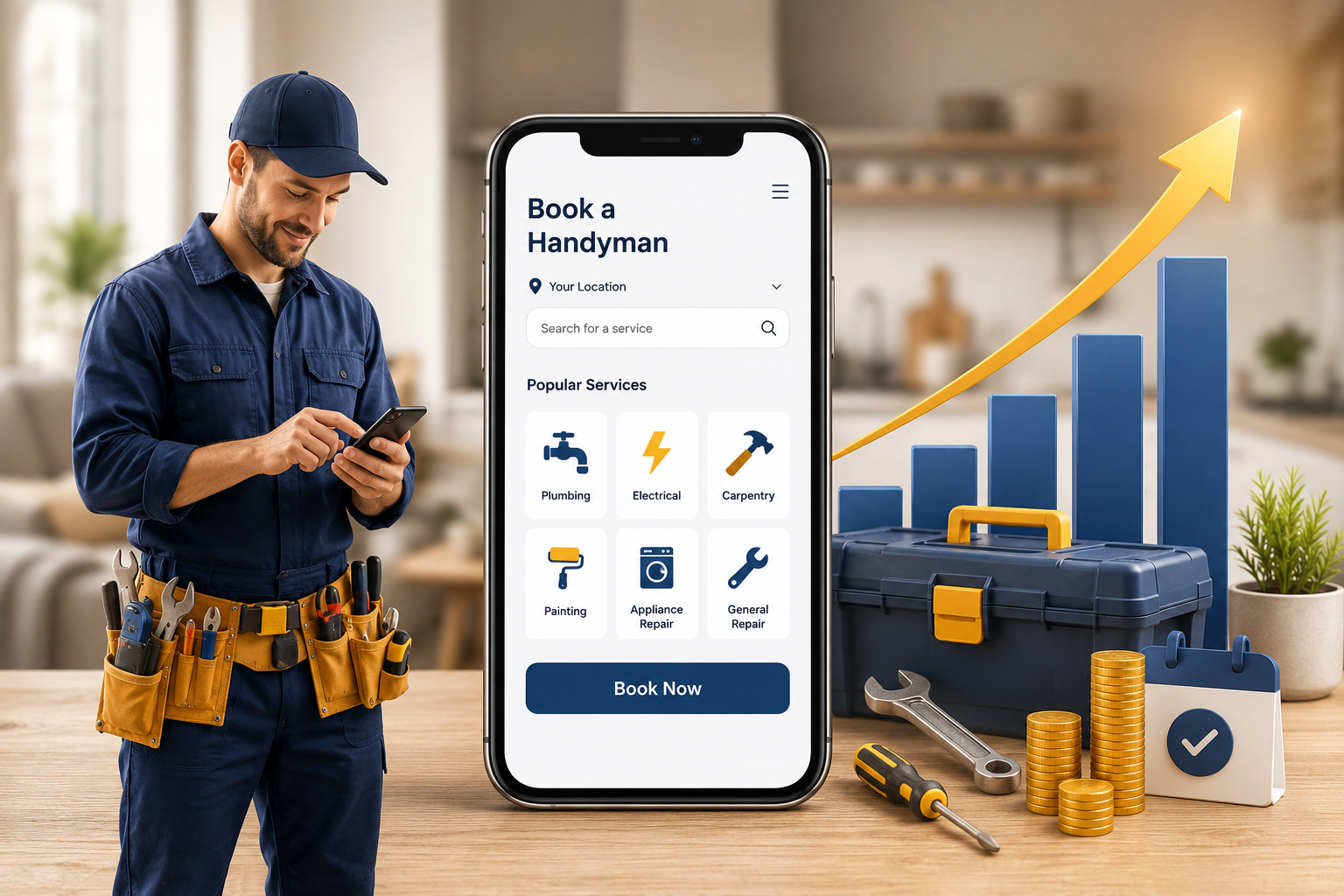
The home service industry is becoming more digital every year. In 2026, customers expect faster service, instant booking options, real-time updates, and seamless communication when hiring home service professionals. Businesses that fail to adapt to these expectations are finding it increasingly difficult to compete in a rapidly changing market.
Today, users no longer want to search through newspapers, ask neighbors for recommendations, or spend time making multiple phone calls just to book a plumber or electrician. Instead, they prefer mobile applications that allow them to schedule services within minutes.
This shift in customer behavior is creating major opportunities for businesses investing in mobile-based home service platforms. A professionally designed handyman application not only improves customer convenience but also helps businesses increase bookings, improve retention, and generate higher revenue.
As competition continues growing in the on-demand economy, businesses are increasingly adopting handyman app development services to streamline operations and create scalable digital ecosystems.
What is a Handyman Service?
A handyman service business provides repair, maintenance, installation, and home improvement solutions for residential and commercial customers.
These services commonly include:
-
Plumbing
-
Electrical work
-
Carpentry
-
Cleaning services
-
Painting
-
Appliance repair
-
HVAC maintenance
-
Home renovation support
Traditionally, managing these services involved manual scheduling, phone-based coordination, and paper-based records. However, mobile applications have transformed the process into a faster and more efficient digital experience.
A handyman app connects customers and service providers through one centralized platform where users can:
-
Browse available services
-
Schedule appointments
-
Track technicians in real time
-
Make secure online payments
-
Rate service professionals
-
Receive instant notifications
This digital convenience directly impacts customer satisfaction and business profitability.
Why Customer Expectations Are Changing in 2026
Technology is influencing how customers interact with service businesses. Consumers now expect speed, transparency, and accessibility across every industry.
Several factors are driving this change:
Mobile-First Consumer Behavior
Most users now search for local services through smartphones rather than desktop websites or offline directories.
Demand for Instant Convenience
Customers prefer businesses that provide immediate booking confirmation and quick technician availability.
Real-Time Communication
Users expect live updates regarding service status, technician arrival time, and payment confirmation.
Trust and Transparency
Ratings, reviews, pricing visibility, and tracking systems help customers feel more confident when booking services online.
Businesses that adapt to these expectations are seeing higher customer engagement and better conversion rates.
How Handyman Apps Increase Customer Bookings
24/7 Service Availability
Unlike traditional booking systems that rely on office hours, mobile applications allow customers to book services anytime.
This flexibility significantly increases booking opportunities because users can schedule appointments whenever it is convenient for them.
Faster Booking Process
A complicated booking experience often leads to customer drop-offs.
A well-designed handyman application simplifies the process through:
-
One-tap service selection
-
Instant scheduling
-
Automated confirmations
-
Saved user preferences
-
Easy payment integration
Businesses investing in handyman app development solutions often experience improved customer acquisition because the entire process becomes faster and more user-friendly.
Improved Local Visibility
Mobile applications help businesses attract customers from nearby locations through GPS integration and location-based services.
Features like:
-
Nearby service availability
-
Geo-targeted notifications
-
Local search optimization
-
Hyperlocal service mapping
allow businesses to expand their reach and improve booking frequency.
Customer Retention Through Personalized Experiences
Customer retention is equally important as acquiring new users.
Handyman apps improve retention through:
-
Loyalty rewards
-
Personalized recommendations
-
Service reminders
-
Special offers
-
Booking history access
These features encourage repeat bookings and long-term customer relationships.
How Handyman Apps Increase Revenue
Multiple Revenue Streams
Modern handyman platforms can generate revenue through several business models.
These include:
-
Commission-based bookings
-
Subscription packages
-
Featured service listings
-
Premium memberships
-
In-app advertising
-
Surge pricing during peak demand
This flexibility allows businesses to maximize profitability while expanding their services.
Better Technician Utilization
Poor scheduling often results in technician downtime and operational inefficiencies.
Smart scheduling systems help businesses:
-
Assign jobs automatically
-
Reduce travel time
-
Optimize daily schedules
-
Improve workforce productivity
Efficient operations directly contribute to higher revenue generation.
Reduced Operational Costs
Manual operations often require larger administrative teams and increase the chances of human error.
Mobile applications automate several processes including:
-
Appointment scheduling
-
Customer notifications
-
Payment tracking
-
Invoice generation
-
Service management
This automation helps businesses reduce operational expenses while improving service quality.
The Impact of AI on Handyman Applications
Artificial intelligence is becoming one of the most valuable technologies in the home service industry.
AI powered handyman app development is helping businesses create smarter and more efficient customer experiences.
AI Chat Support
AI chatbots provide instant responses to customer inquiries and booking requests.
Smart Recommendations
AI systems analyze customer behavior and suggest relevant services based on previous interactions.
Predictive Scheduling
Artificial intelligence can forecast demand and optimize technician assignments.
Dynamic Pricing
AI algorithms adjust pricing based on demand, location, and service urgency.
These capabilities help businesses improve customer satisfaction while maximizing revenue opportunities.
Essential Features That Drive Business Growth
A successful handyman application should include features that benefit both users and administrators.
Important features include:
Real-Time Tracking
Customers can monitor technician locations and estimated arrival times.
Secure Payment Systems
Integrated digital payments improve convenience and trust.
Ratings and Reviews
Customer feedback systems increase platform credibility.
Push Notifications
Instant alerts keep users informed about bookings and updates.
Multi-Service Management
Businesses can offer multiple services through one centralized platform.
A reliable handyman app development company focuses on building scalable and feature-rich platforms that support long-term business growth.
Why Startups Are Investing in Handyman Apps
The on-demand home service market continues expanding rapidly, creating opportunities for startups and entrepreneurs.
Key reasons startups are entering this market include:
-
Growing customer demand
-
Recurring revenue opportunities
-
Scalable business models
-
Increased smartphone penetration
-
Rising urbanization
Startups investing in handyman business app development can establish strong digital brands while capturing growing market demand.
Future Trends in Handyman App Development
The future of home service platforms will become even more technology-driven.
Emerging trends include:
-
Voice-enabled bookings
-
AI-powered automation
-
Smart home integrations
-
AR-assisted repairs
-
Predictive maintenance systems
-
Blockchain-based payment security
Businesses adopting these innovations early will gain stronger market positioning in the coming years.
Conclusion
The home service industry is evolving rapidly, and mobile technology is becoming essential for business growth. Customers now expect convenience, speed, and transparency when booking home maintenance services.
A modern handyman application helps businesses improve customer engagement, increase bookings, optimize operations, and generate higher revenue through scalable digital solutions.
As competition intensifies in 2026, businesses that embrace innovation and invest in customer-focused mobile platforms will be better prepared for long-term success in the growing on-demand economy.
Share On :
Tweet | LinkedIn | |