Learn how to mix metals in jewelry with 7 stylish ideas for combining gold and silver. Explore easy tips for rings, layered necklaces, bracelets, and ear cuffs to create a balanced, modern look with Reclaimed With Love.
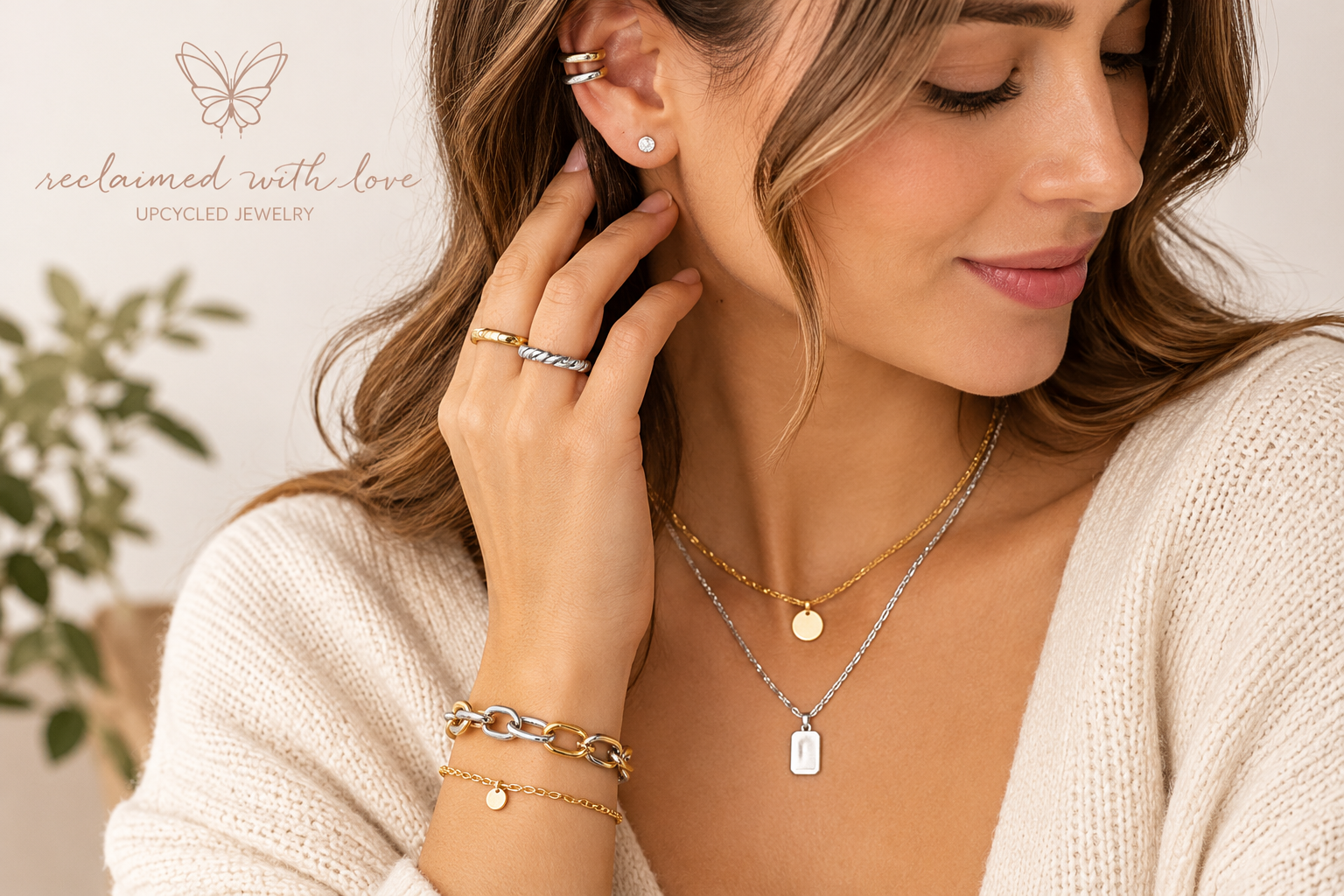
For years, many people followed one simple jewelry styling rule: wear gold with gold and silver with silver. However, modern accessories have moved beyond matching every piece. Today, mixed metal jewelry offers a fresh way to express personal style by combining different metallic tones in one balanced look.
If you've ever wondered how to mix metals jewelry or asked yourself, "Can you mix metals in jewelry without making your outfit look mismatched?" the answer is absolutely yes. Gold, silver, and other metallic finishes can complement one another when styled thoughtfully.
Whether you prefer delicate necklaces, statement rings, gold and silver earrings, or ear cuff earrings, mixing metals gives you more flexibility with the pieces you already own. It also supports sustainable jewelry styling by encouraging you to combine existing accessories rather than purchasing an entirely new matching set.
In this guide, we'll explore seven practical ways to style mixed metal jewelry, create balanced combinations, and make your everyday accessories look effortlessly coordinated.
One of the easiest ways to style mixed metal jewelry is to begin with a dominant metal. This gives your overall look a consistent foundation while allowing another metallic tone to add contrast.
For example, if most of your jewelry collection features gold, make gold your primary finish and introduce silver through a bracelet, ring, or pair of earrings. If you usually wear silver, use gold as your accent instead.
You don't need to divide your accessories equally between both metals. A balanced combination can include:
Gold as the primary metal: Wear gold necklaces, rings, and bracelets with one or two silver accents.
Silver as the primary metal: Build your look around silver accessories and introduce a gold statement piece.
Two-tone jewelry: Use a piece featuring both finishes to connect the different metallic tones.
The goal is to create a consistent appearance without making every accessory look identical. Starting with one dominant metal also makes it easier to experiment with combinations using the jewelry you already own.
Rings are among the easiest accessories to experiment with when creating a mixed-metal look. Instead of keeping all your gold and silver rings separate, try wearing them together across different fingers.
Spreading the metallic tones across both hands creates a natural balance and prevents your rings from competing for attention.
Here are three simple ways to style them:
Alternate between fingers: Wear a gold band on your index finger and a silver ring on your middle or ring finger.
Create a balanced combination: Wear gold rings on one hand and silver rings on the other.
Add a two-tone ring: Choose a design that combines both finishes to connect the overall look.
Delicate bands, minimalist rings, and simple textured designs work particularly well because they add variety without overwhelming your hands.
You can also experiment with different ring shapes and finishes. Combining smooth gold bands with textured silver rings creates visual interest while keeping your accessories coordinated.
You don't have to combine gold and silver in every accessory to achieve a stylish appearance. Sometimes, one statement piece is enough to bring the entire look together.
A two-tone necklace, mixed-metal bracelet, or pair of mixed metal ear cuff earrings can introduce both finishes without requiring additional accessories in contrasting tones.
To style a statement piece effectively:
Choose one standout accessory: A two-tone pendant, chunky bracelet, or mixed-metal ear cuff can become the focal point.
Keep other accessories simple: Pair your statement piece with minimal gold or silver studs and delicate chains.
Avoid unnecessary layering: Allow the statement accessory to remain the main focus of your look.
This approach is especially useful if you're new to mixing metals. You can experiment with one versatile accessory before incorporating different finishes throughout your jewelry collection.
Building a versatile collection doesn't have to happen all at once. A monthly jewelry subscription can also help you add different styles and accessories over time, making it easier to experiment with new combinations.
Layering necklaces is another effective way to incorporate different metallic finishes into your everyday style. Combining gold and silver chains creates dimension and makes even a simple outfit feel more thoughtfully accessorized.
The key is choosing different necklace lengths so each piece has enough space to stand out.
Consider this simple layering combination:
14–16 inches: A shorter chain that sits close to your collarbone.
17–19 inches: A medium-length necklace that works well with a small pendant.
20 inches or longer: A longer chain that adds another dimension to the layered look.
You can alternate between gold and silver at each length. For example, wear a short gold chain, a medium silver necklace, and a longer gold pendant.
Consider mixing chain thicknesses and pendant styles as well. A delicate silver chain paired with a slightly thicker gold necklace creates contrast without looking overcrowded.
For an even more coordinated appearance, choose necklaces with similar design details, such as minimal pendants or simple chain links.
Your ears provide one of the easiest places to experiment with different metallic tones. Multiple earrings allow you to introduce gold and silver in smaller proportions, making the combination look natural and effortless.
Gold and silver earrings can work beautifully together, especially when you balance their sizes, shapes, and placement.
Try these styling combinations:
Gold studs with silver cuffs: Keep your main earrings simple and introduce silver through an ear cuff.
Silver studs with gold hoops: Combine small silver studs with a gold hoop for a subtle contrast.
Mixed-metal ear cuffs: Choose a cuff featuring both metallic finishes to connect your earrings.
Different earring shapes: Combine small hoops, delicate studs, and ear cuffs to create a more personalized ear stack.
Ear cuff earrings are particularly useful because many designs can be worn without an additional piercing. This makes them an easy way to experiment with different finishes and create a layered appearance.
If you enjoy experimenting with earrings, consider exploring different ear cuff styles and jewelry combinations to build a collection that works with both gold and silver accessories.
Watches and bracelets can help create a balanced mixed-metal appearance, particularly when you prefer wearing accessories around your wrists.
If you regularly wear a silver watch, you don't need to avoid gold jewelry elsewhere. Instead, introduce a delicate gold bracelet alongside your watch to connect the different metallic finishes.
Here are a few combinations to try:
Silver watch with gold bracelet: Pair a classic silver watch with a thin gold chain bracelet.
Gold watch with silver cuff: Add a simple silver cuff for a subtle contrast.
Mixed-metal bracelet stack: Combine different chain styles and metallic tones for a layered appearance.
Single contrast bracelet: If you prefer minimal accessories, add just one bracelet in the opposite metal.
Pay attention to the size and weight of your accessories. A bulky watch generally looks better with delicate bracelets, while smaller watches can work with slightly more noticeable pieces.
The idea is to create a coordinated combination rather than wearing multiple accessories that compete for attention.
One of the most useful styling techniques for mixed metal jewelry is repeating each metallic finish throughout your accessories.
If you wear several silver pieces and introduce only one gold accessory, the gold element may look disconnected. Adding another gold detail elsewhere helps create a more intentional appearance.
For example:
Pair a gold necklace with a gold ring and silver earrings.
Wear silver bracelets with silver studs and a gold pendant.
Combine gold ear cuff earrings with a silver necklace and another small gold accessory.
Style a two-tone ring with matching gold and silver bracelets.
You don't need to repeat the exact same jewelry design. A gold ring and a gold necklace can complement each other even when their shapes and styles are completely different.
This technique works particularly well for everyday outfits because it makes your accessories feel coordinated without requiring a matching jewelry set.
Mixed metal jewelry isn't just about combining different colors. It also gives you more opportunities to experiment with your personal style.
Here are a few reasons why this approach works so well:
More styling flexibility: You can wear gold and silver accessories together instead of choosing only one finish.
Better use of existing jewelry: Combining pieces you already own helps create new looks without purchasing additional matching sets.
Versatile combinations: Mixed metals work with casual outfits, office clothing, and special occasion styles.
Personal expression: You can experiment with different shapes, textures, and metallic finishes to create combinations that reflect your personality.
This approach also complements sustainable jewelry styling. Making better use of existing accessories can encourage more thoughtful purchasing decisions while allowing you to enjoy different combinations.
Mixing gold and silver doesn't have to be complicated. With a few simple styling techniques, you can create combinations that look balanced, modern, and effortless.
Start by choosing a dominant metal, experiment with rings and layered necklaces, and introduce contrast through bracelets or ear cuff earrings. Repeating each metallic tone throughout your accessories can also help create a more coordinated appearance.
Most importantly, don't feel restricted by traditional matching rules. Your jewelry should reflect your personality, complement your outfits, and give you the freedom to experiment with different styles.
If you're ready to add more versatility to your accessory collection, explore our ear cuffs and jewelry bundles. You can also try a monthly jewelry subscription to enjoy new jewelry styles and create fresh combinations over time.
Yes! Gold and silver can look beautiful when worn together. You can combine necklaces, rings, bracelets, and earrings in different metallic finishes. Choosing a dominant metal and repeating both tones throughout your accessories helps create a balanced appearance.
Absolutely. There is no strict rule that says you must wear only one metal at a time. Mixing different metallic finishes is a popular styling approach that allows you to create more versatile and personalized accessory combinations.
Start with one dominant metal and introduce the second as an accent. You can also repeat each metallic finish at least twice, use two-tone accessories, and combine similar jewelry styles to make the overall look feel coordinated.
Yes. Gold and silver earrings work well together, especially when you combine different sizes and shapes. For example, you can wear gold hoops with silver studs or introduce a contrasting ear cuff to create a stylish ear stack.
Yes. Mixed metal accessories are versatile enough for everyday wear, office outfits, casual clothing, and special occasions. Simple rings, delicate necklaces, small hoops, and minimal bracelets are easy ways to incorporate different metallic finishes.
For a simple and balanced look, start with two metallic finishes, such as gold and silver. You can introduce a third finish, such as rose gold, when the designs and proportions complement one another. Keeping the overall combination simple helps avoid an overcrowded appearance.
Yes. Gold engagement rings can be paired with silver accessories, and silver or platinum wedding bands can complement gold necklaces and bracelets. You can also choose two-tone rings that naturally combine different metallic finishes.
Definitely. Minimalist jewelry works particularly well with mixed metals because delicate chains, thin rings, and small earrings create subtle contrast. You don't need large statement accessories to make the combination noticeable.
Start by looking at the accessories you already own and identify opportunities to combine different finishes. Choose versatile designs that work with multiple outfits, avoid unnecessary purchases, and consider jewelry made with reclaimed or repurposed materials when adding new pieces.
A monthly jewelry subscription can be a thoughtful jewelry subscription gift for someone who enjoys trying different accessories. It offers an opportunity to receive new styles over time and experiment with different jewelry combinations rather than selecting just one piece for a special occasion.