Latest Updates Click Here


Paxful Clone Script: How to Launch a P2P Crypto Exchange in 2026
Learn how to launch a feature-rich P2P crypto exchange using a Paxful Clone Script. This guide covers essential features, security, development strategies, and key considerations for building a competitive crypto trading platform in 2026.
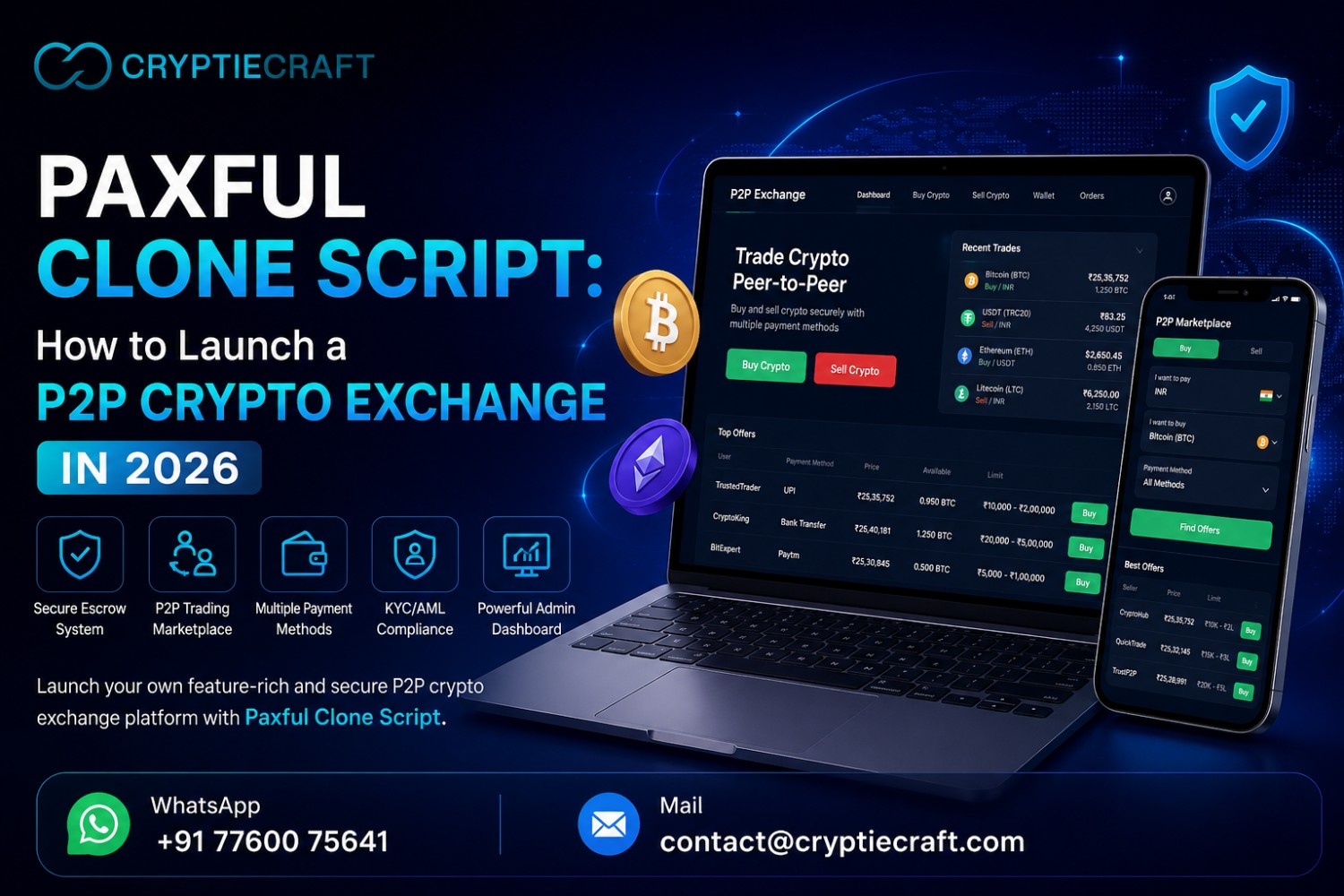
Peer-to-peer crypto trading continues to attract entrepreneurs because it gives users more flexibility in how they buy and sell digital assets. Unlike a traditional centralized exchange where every trade follows a standard order-book model, a P2P marketplace connects buyers and sellers directly while the platform provides escrow, security, dispute management, and payment infrastructure.
For businesses planning to enter this market in 2026, a Paxful Clone Script can provide a practical foundation for launching a feature-rich P2P crypto exchange without developing every component from scratch. However, building a successful platform requires more than simply replicating an existing exchange. The real opportunity lies in creating a secure, scalable, and differentiated trading experience.
What Is a Paxful Clone Script?
A Paxful Clone Script is a customizable software solution designed around the core P2P trading model popularized by Paxful. It allows entrepreneurs to create a marketplace where users can post buy or sell offers, select preferred payment methods, negotiate trade conditions, and complete transactions securely.
A well-developed Paxful exchange script can be customized with your own branding, supported cryptocurrencies, revenue model, payment options, security systems, and regional features.
Instead of creating the complete architecture from zero, businesses can focus development resources on customization, compliance, user experience, and market-specific requirements.
Essential Features of a P2P Crypto Exchange
The success of a P2P exchange depends heavily on trust and ease of use. Buyers and sellers need confidence that transactions can be completed safely, even when they are dealing directly with unfamiliar users.
A competitive platform should consider features such as:
- Escrow system to temporarily secure crypto during transactions
- Multiple payment methods for greater trading flexibility
- KYC and AML integrations based on applicable regulatory requirements
- User ratings and reviews to establish trader reputation
- Real-time notifications for trade and account updates
- Dispute management for resolving transaction disagreements
- Admin dashboard for monitoring users, trades, commissions, and disputes
- Multi-currency and multilingual support for broader market expansion
These capabilities can also be incorporated into a Paxful clone app, allowing traders to manage transactions conveniently from mobile devices.
How to Launch Your Paxful-Like Exchange in 2026
Launching a P2P exchange should begin with understanding your target audience rather than immediately starting development.
First, identify the countries or user segments you want to serve. Research their preferred cryptocurrencies, local payment methods, regulatory environment, and existing competitors.
Next, define your business model. P2P exchanges can generate revenue through trading commissions, withdrawal fees, listing or advertisement fees, premium services, and other platform-specific charges.
Once the business model is clear, move into Paxful clone app development and platform customization. Instead of producing an identical copy, develop a distinct product with your own UI/UX, security architecture, trading features, and brand identity.
Development time will depend heavily on customization. Understanding the crypto exchange clone script development timeline early can help you plan UI design, feature integration, testing, security reviews, deployment, and launch more realistically.
Paxful Clone vs Bybit Clone: Know the Difference
Choosing the right exchange model is an important business decision.
A Paxful-style solution primarily focuses on peer-to-peer trading, where individual buyers and sellers interact through listings and multiple payment options.
A Bybit clone, in contrast, generally focuses on a broader centralized trading experience that may include spot markets, derivatives, advanced charts, order books, and professional trading tools.
Your choice should therefore depend on your target market. If your goal is to build a marketplace centered around direct buyer-seller transactions and flexible payment methods, the P2P model may be more suitable.
Security Should Be Built Into the Platform
Security cannot be treated as an optional feature in crypto exchange development. A single vulnerability can damage both user trust and business credibility.
Your platform architecture should consider secure wallet infrastructure, two-factor authentication, encrypted data handling, anti-phishing measures, suspicious transaction monitoring, withdrawal protection, and regular security testing.
For P2P trading specifically, a reliable escrow mechanism and structured dispute-resolution process are particularly important.
Build More Than Just a Paxful Copy
A Paxful Clone Script can accelerate the technical starting point, but long-term success depends on how effectively you differentiate the final product.
Think beyond cloning. Introduce localized payment options, improve onboarding, simplify trading workflows, build stronger security controls, and solve specific problems faced by your target users.
Working with an experienced Crypto Exchange Clone Software Provider can help transform a ready-made foundation into a customized P2P trading ecosystem built around your business model, market requirements, security priorities, and future growth plans.
Share On :
Tweet | LinkedIn | |