Learn what aerial yoga is, explore its benefits for flexibility, strength, balance, and relaxation, and discover beginner-friendly poses, safety tips, and how to get started. Find out whether aerial yoga is right for you and explore wellness experiences at Insumataq Studio.
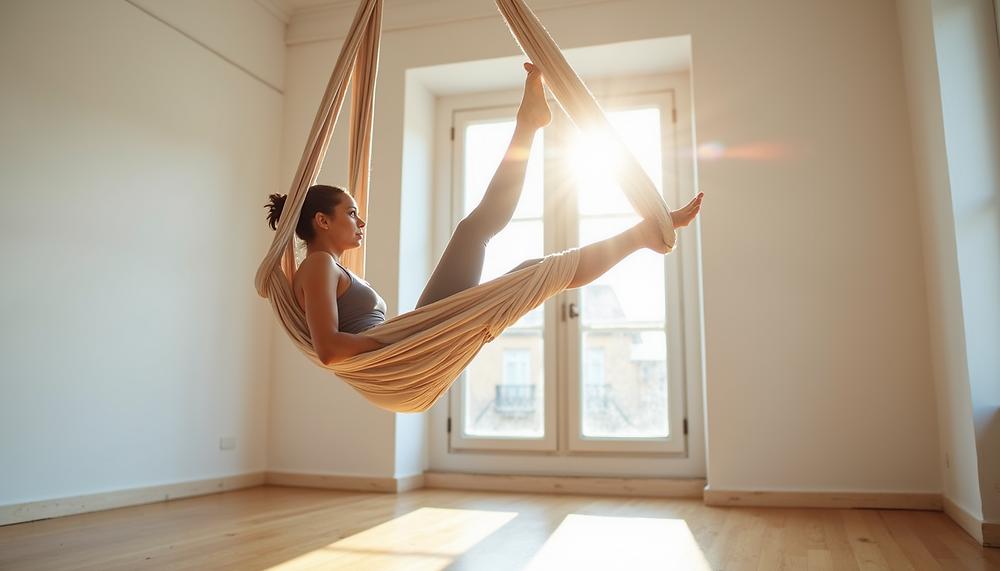
Aerial yoga combines traditional yoga movements with a soft fabric hammock suspended above the ground. It helps you explore stretching, balance, strength, and relaxation in a different way. Whether you are new to yoga or looking to try something beyond your regular mat practice, aerial yoga offers a playful way to move, build body awareness, and discover new possibilities at your own pace.
Aerial yoga is a form of yoga that uses a suspended fabric hammock to support the body during different poses and stretches. The hammock can help you balance, lean back, stretch your muscles, and explore movements that may feel different on a traditional yoga mat.
Some poses keep your feet firmly on the floor, while others use the hammock to support more of your body weight. Depending on the class, you may also practice gentle inversions, where your hips or legs are supported as your head moves below your heart.
Unlike aerial acrobatics, which often focuses on tricks and performance, many aerial yoga classes emphasize controlled movement, flexibility, strength, breathing, and relaxation.
You do not need to be an experienced yogi to explore aerial yoga. A beginner-friendly class can help you learn how to use the hammock, understand basic movements, and build confidence gradually.
Aerial yoga combines movement, balance, stretching, and mindful breathing. While research specifically on aerial yoga is still limited, the practice offers several potential benefits as a form of physical activity. Individual experiences will vary depending on your fitness level, health, and class style.
The hammock provides support during certain stretches, allowing you to explore your range of motion in a new way. Depending on the pose, it may help you stretch areas such as the hips, shoulders, legs, and back.
Regular, appropriately paced practice can help you become more familiar with your body's movement and flexibility. You do not need to force yourself into deep stretches to benefit from moving comfortably.
Aerial yoga is not only about stretching. Holding certain positions, controlling your movements, and stabilizing your body can engage your core, arms, shoulders, and legs.
The hammock also moves differently from a solid yoga mat, so some poses require additional coordination and balance. Starting with simple movements helps you develop these skills before progressing to more challenging poses.
Like other forms of yoga, aerial yoga can provide an opportunity to slow down, focus on your breathing, and pay attention to how your body feels.
Moving at a comfortable pace and taking time to rest may help you create a more mindful exercise routine. Some people also enjoy the calming feeling of resting inside the hammock at the end of a session.
Aerial yoga should not be viewed as a guaranteed treatment for anxiety, stress, or other health conditions. Instead, it can be one way to make time for movement and personal well-being.
If your usual yoga routine feels repetitive, aerial yoga introduces a new element through the hammock. Familiar movements can feel different when you have fabric supporting your body.
This variation can make your practice more engaging and encourage you to approach movement with curiosity rather than focusing on perfecting every pose.
The hammock can provide support in certain positions, helping some people explore movements that feel difficult on the floor.
However, aerial yoga is not automatically easier than traditional yoga. Some poses require upper-body strength, coordination, and confidence. A qualified instructor can help you choose suitable variations and progress at a pace that feels manageable.
If you are new to aerial yoga, begin with basic movements under the guidance of a qualified instructor. The following poses and variations can help you understand how the hammock supports your body.
1. Seated Hammock Pose
Sit in the hammock with your feet supported as instructed. Relax your shoulders, lengthen your spine, and breathe naturally. This is a simple starting point for getting comfortable with the fabric.
2. Supported Forward Fold
Use the hammock for support while gently folding forward from the hips. Keep your knees slightly bent if needed and avoid pulling yourself into a deeper stretch.
3. Supported Lunge
With the hammock helping you maintain balance, step into a comfortable lunge. Keep your movements controlled and adjust the depth according to your mobility.
4. Hammock-Assisted Tree Pose
Stand tall and use the fabric for balance while practicing a tree-pose variation. Start with your toes on the floor and choose a position that feels stable.
5. Supported Backbend
Allow the hammock to support your upper or middle back in an instructor-guided variation. Keep the movement gentle and avoid forcing your spine into a deep arch.
6. Supported Hip Stretch
Use the hammock to assist a comfortable hip-opening stretch. Move slowly and stop if you feel pinching, sharp pain, or excessive pressure around your hips.
7. Hammock Relaxation Pose
Rest inside the hammock with your body comfortably supported. Let your breathing return to its natural rhythm and take a few moments to relax at the end of your practice.
Important: These are examples, not instructions for unsupervised practice. Pose names and techniques vary between studios. Learn how to enter and exit each position safely before trying it independently.
Both practices can include stretching, controlled movement, balance, and breathing exercises. The main difference is the equipment and how you interact with your body weight.
|
Feature |
Aerial yoga |
Traditional mat yoga |
|---|---|---|
|
Equipment |
Suspended fabric hammock |
Yoga mat and optional props |
|
Support |
Hammock supports the body in selected poses |
Floor and yoga props provide support |
|
Movement |
Includes suspended and hammock-assisted variations |
Mostly performed on the floor or standing |
|
Balance |
May involve adapting to moving fabric |
Usually involves a stable surface |
|
Difficulty |
Varies by class and pose |
Varies by style and pose |
|
Best starting point |
Beginner class with hammock instruction |
Beginner mat class with pose modifications |
Neither practice is automatically better than the other. Your choice depends on your comfort, preferences, physical needs, and the kind of movement you enjoy.
Yes, aerial silk yoga can be an option for beginners when they start with an appropriately designed class and receive guidance from a qualified instructor.
You do not need to know advanced yoga poses or be able to perform splits. A beginner class should focus on understanding the hammock, learning how to get into and out of basic positions, and building confidence through simple movements.
Keep these tips in mind:
Start with a beginner class. Look for a session that explains the equipment and offers modifications.
Communicate with your instructor. Mention any discomfort, mobility limitations, injuries, or concerns before class.
Take your time. You can repeat basic poses until you feel comfortable.
Keep inversions optional. You do not have to hang upside down to participate in aerial yoga.
Listen to your body. Stop if a movement causes sharp pain, dizziness, numbness, or unusual discomfort.
The goal is not to perform the most impressive pose. It is to learn safe movement and find a practice that suits you.
Choosing the right clothing can make aerial yoga more comfortable and help you move without unnecessary distractions.
Here are a few simple suggestions:
Wear fitted, stretchy clothing that allows free movement.
Choose a top that covers your underarms and a bottom that covers your legs to reduce friction against the hammock.
Avoid clothing with zippers, buckles, or decorative hardware that could catch on the fabric.
Remove large jewelry and accessories before class.
Follow the studio's guidance on footwear, usually bare feet for yoga practice.
Bring water and arrive early enough to learn the equipment and ask questions.
Comfort matters more than buying special yoga clothing. Choose something that allows you to stretch, bend, and move with confidence.
Aerial yoga requires additional attention to equipment, balance, and body positioning because the hammock is suspended above the floor. For healthy people, yoga is generally considered safe when practiced properly with qualified instruction, but injuries can still occur.
To help reduce risks, always use a properly installed and maintained aerial hammock, follow the instructor's directions, and avoid advanced poses before you have learned the basics.
Speak with your healthcare professional before participating, particularly if you are pregnant or have glaucoma, high blood pressure, a heart condition, significant balance problems, a recent injury or surgery, or neck or spine concerns. Some conditions may require you to avoid inversions or aerial yoga altogether.
Never attempt to install a hammock using an unverified ceiling fixture or practice advanced inversions alone at home.
Your ideal frequency depends on your fitness level, recovery, and the intensity of your classes.
If you are new to aerial yoga, start with a manageable schedule and give yourself time to adjust to the movements. Pay attention to muscle soreness and fatigue, especially after sessions that involve more strength or balance work.
As you become more familiar with the practice, you can discuss an appropriate schedule with your instructor. Consistency is helpful, but there is no need to push through pain or attend more classes than your body can comfortably manage.
You can also combine aerial yoga with walking, gentle stretching, or a traditional yoga practice to create variety in your movement routine.
Trying a new movement practice can feel unfamiliar at first, especially when it involves a hammock. The right environment can help you learn the basics, ask questions, and discover which movements feel comfortable for you.
At Insumataq Studio, the focus is on creating opportunities for movement, self-awareness, and well-being. If you are curious about aerial yoga, explore the studio's website to learn more about its classes and current offerings.
Whether you are exploring yoga for the first time or looking for a new way to move, begin with curiosity, respect your limits, and give yourself permission to learn at your own pace.
Ready to explore your next step in movement and well-being?
Explore the classes and wellness experiences available at Insumataq Studio.
Visit the website to check current offerings, class information, and booking options.
Explore Insumataq Studio
Aerial yoga is a movement practice that combines yoga-inspired poses with a suspended fabric hammock. People practice it to explore flexibility, balance, strength, coordination, and relaxation.
Yes. Beginners can start with an introductory class that teaches basic hammock use, supported poses, and safe movement. You do not need advanced yoga experience, but you should follow the instructor's guidance.
No. You do not need to be naturally flexible to begin. Start with simple movements and gradually explore your range of motion without forcing stretches or comparing your progress with others.
Aerial yoga includes supported stretches that may help you work on flexibility and mobility over time. Results vary, and the benefits depend on your technique, consistency, and individual physical needs.
It depends on the class and poses. The hammock may support you during some movements, while other positions require greater coordination, strength, and balance. Both aerial and mat yoga can be adapted for different experience levels.
Some people find yoga helpful for relaxation because it combines movement, breathing, and focused attention. Aerial yoga may provide a similar opportunity, but it is not a guaranteed treatment for stress or mental health conditions.
It is best to learn with a qualified instructor before attempting aerial yoga independently. A hammock must be installed using an appropriate, professionally verified support system. Improper installation can cause serious injuries.
Aerial yoga may be unsuitable for some people, particularly those with conditions affected by inversions, suspended positions, or balance demands. People who are pregnant or have glaucoma, high blood pressure, heart conditions, recent injuries or surgery, or neck and spine problems should seek medical advice before participating.
Wear comfortable, fitted, stretchy clothing that covers your underarms and legs. Avoid zippers, buckles, and jewelry that could snag the hammock, and follow the studio's specific clothing guidelines.
Visit the Insumataq Studio website to explore its current class schedule and wellness offerings. Confirm that aerial yoga is currently available before making plans to attend.