Latest Updates Click Here


Why 3 Carat Diamond Rings Are Trending This Year | KRK Jewels
Wondering why a 3 carat diamond ring is the ultimate style statement? Explore the latest trends, design innovations, and smart pricing options.
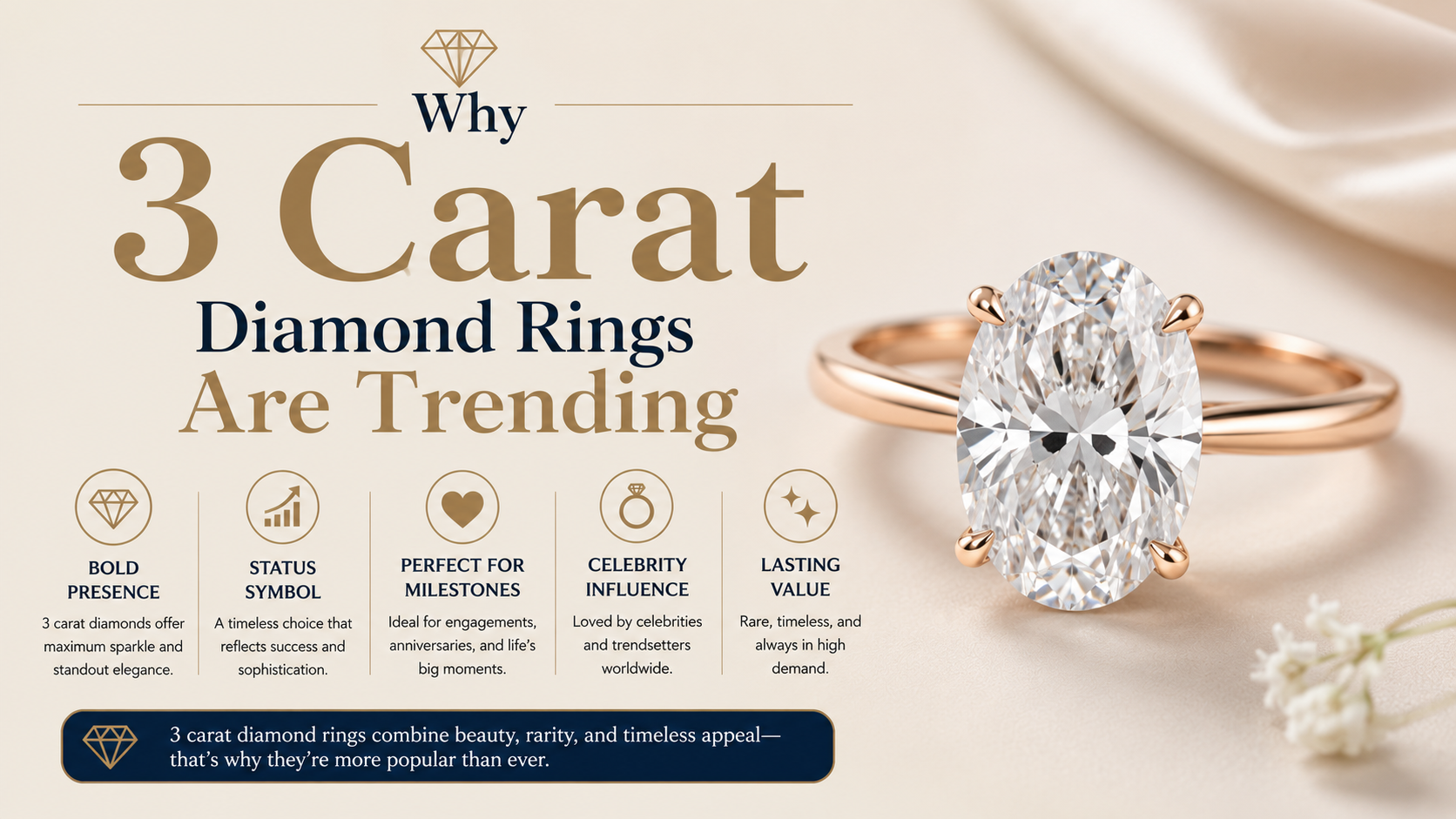
Why 3 Carat Diamond Rings Are Trending
In the world of fine jewelry, certain milestones define an era. Currently, we are witnessing a significant shift in bridal and fine jewelry preferences. While delicate, ultra-minimalist styles previously dominated the market, contemporary tastemakers are embracing bold, expressive, and visually commanding aesthetics. At the heart of this movement is a growing fascination with larger-scale gemstones.
Specifically, the three-carat weight class has transitioned from an elusive luxury reserved for high society to a highly sought-after standard. Guided by a blend of cultural changes, red-carpet influences, and technological progress, brands like KRK Jewels are observing a remarkable rise in clients seeking these showstopping statements.
The Cultural Shift Toward "Bigger and Better"
The current year has introduced a distinct wave of individualism in fashion and design. Modern buyers are treating their fine jewelry as an extension of their personal brand—a canvas for self-expression that demands attention.
The Modern Evolution: 3 Carat Diamond Rings for Women
Historically, large center stones were saved for late-in-life anniversaries or heirloom upgrades. Today, however, 3 carat diamond rings for women are frequently chosen as initial engagement rings. This shift is fueled by a desire for high visual impact. A three-carat stone has a substantial footprint on the finger, offering unparalleled sparkle and surface coverage that immediately commands attention.
Visual Scale Comparison (Approximate Face-Up Diameter)
-
1.00 Carat → ~6.5 mm
-
Elegant, subtle everyday size
-
-
2.00 Carats → ~8.2 mm
-
Noticeably larger with balanced finger coverage
-
-
3.00 Carats → ~9.2 mm
-
Bold, luxurious presence with maximum visual impact
-
Embracing "Quiet Luxury" with Statement Carats
Even as dimensions grow, the trend is not about gaudy or over-designed settings. Instead, the focus is on "quiet luxury"—pairing a high-clarity 3 carat diamond ring with clean, minimalist bands. Elongated shapes like ovals, emerald cuts, and cushions are leading this movement. Because they distribute their weight vertically, these fancy cuts create a highly flattering, elongating effect on the finger while maximizing the stone’s face-up visual size.
Market Dynamics: Demystifying the Cost
With popularity rising, understanding the financial landscape of high-carat purchases is essential for any prospective buyer.
Financial Realities: 3 Carat Diamond Rings Price
A primary consideration is the 3 carat diamond rings price structure. Natural diamonds follow an exponential pricing curve because large, gem-quality raw crystals are exceptionally rare to find in nature. When a diamond reaches the three-carat milestone, its price per carat increases dramatically. Consequently, minor shifts in color and clarity grades can result in price variations of tens of thousands of dollars on the retail market.
The Scarcity Principle: Price Curve
-
0.50–1.50 Carats
-
Linear, steady price increases
-
Widely available across most quality grades
-
-
2.00 Carats
-
Significant price premium
-
Higher demand and lower availability drive costs upward
-
-
3.00+ Carats
-
Exponential price growth
-
Exceptional rarity results in a substantial market premium
-
Sourcing Realities: How Much Are 3 Carat Diamond Rings?
When initiating their search, many couples ask, "How much are 3 carat diamond rings on average?" For natural, mined diamonds with highly desirable color and clarity grades (such as G-color and eye-clean VS2 clarity), retail prices typically start around $30,000 and can easily climb above $100,000 for perfect specimens. This reflects the natural rarity of large, structurally sound diamond crystals.
Accessibility Through Technical Innovation
The astronomical cost of mined gems used to make this carat range inaccessible for most. However, modern scientific advancements have permanently transformed the fine jewelry industry.
The Disruptor: 3 Carat Diamond Rings Lab Grown
One of the most powerful drivers behind this year's big-gem trend is the mainstream adoption of lab-created options. Choosing 3 carat diamond rings lab grown alternatives allows couples to acquire a stone that is physically, chemically, and optically identical to an earth-mined diamond, but at a fraction of the cost. Grown in highly controlled settings that mimic the earth's natural geological forces, these lab diamonds allow buyers to enjoy the prestigious three-carat look without compromise.
Designing Smart: Affordable 3 Carat Diamond Rings
For those who wish to navigate their budget wisely, finding affordable 3 carat diamond rings is entirely achievable with strategic planning. Jewelers at KRK Jewels recommend focusing your resources primarily on the "Cut" grade. An "Excellent" or "Ideal" cut grade ensures that the stone reflects light with maximum efficiency. This intense sparkle can actually mask subtle color tints and minor internal inclusions, allowing you to opt for lower color or clarity grades without sacrificing the ring's breathtaking visual appeal.
Choosing the Perfect Setting for a Large Stone
Because a three-carat center stone has a higher profile and sits more prominently on the hand, the design of the band and basket must be handled with architectural care.
-
The Solitaire Revival: Clean, ultra-thin bands (often down to 1.5mm) are incredibly popular. They make the center stone appear to "float" elegantly above the hand.
-
Hidden Halos: A subtle, glittering collar of diamonds wrapped around the base of the prongs adds a touch of secret sparkle without distracting from the main gem.
-
Mixed Metals: Combining a yellow gold band with platinum prongs is a major trend. This keeps the prongs completely invisible against the white diamond while offering the warm, vintage aesthetic of yellow gold on the finger.
Ultimately, the surge in popularity of three-carat diamond rings reflects a joyful return to personal expression, celebratory luxury, and smart jewelry buying. Whether choosing a classic natural stone or a modern lab-grown gem, this carat weight remains an unforgettable way to mark a lifetime commitment.
Frequently Asked Questions
Which diamond shape looks the largest at 3 carats?
Elongated shapes like the oval, marquise, and pear cut distribute their carat weight across a wider surface area. As a result, they have a larger "spread" and look significantly bigger than a traditional round brilliant cut of the exact same weight.
Are lab-grown diamonds real diamonds?
Yes. Lab-grown diamonds are 100% real diamonds. They are composed of pure carbon and share the exact same physical, chemical, and optical properties as natural, earth-mined diamonds. They are graded using the same 4Cs criteria by leading gemological institutes like the GIA and IGI.
What is the best clarity grade for a 3 carat diamond?
Because three-carat diamonds have a larger face-up surface area, internal inclusions are easier to spot than in smaller stones. To ensure your diamond is "eye-clean" (meaning no flaws are visible to the naked eye), it is highly recommended to aim for a clarity grade of VS2 or higher.
Share On :
Tweet | LinkedIn | |