Planning on buying a gas station convenience store in Ontario? Check fuel contracts, tanks, licences, finances and the lease before you sign. Full checklist.
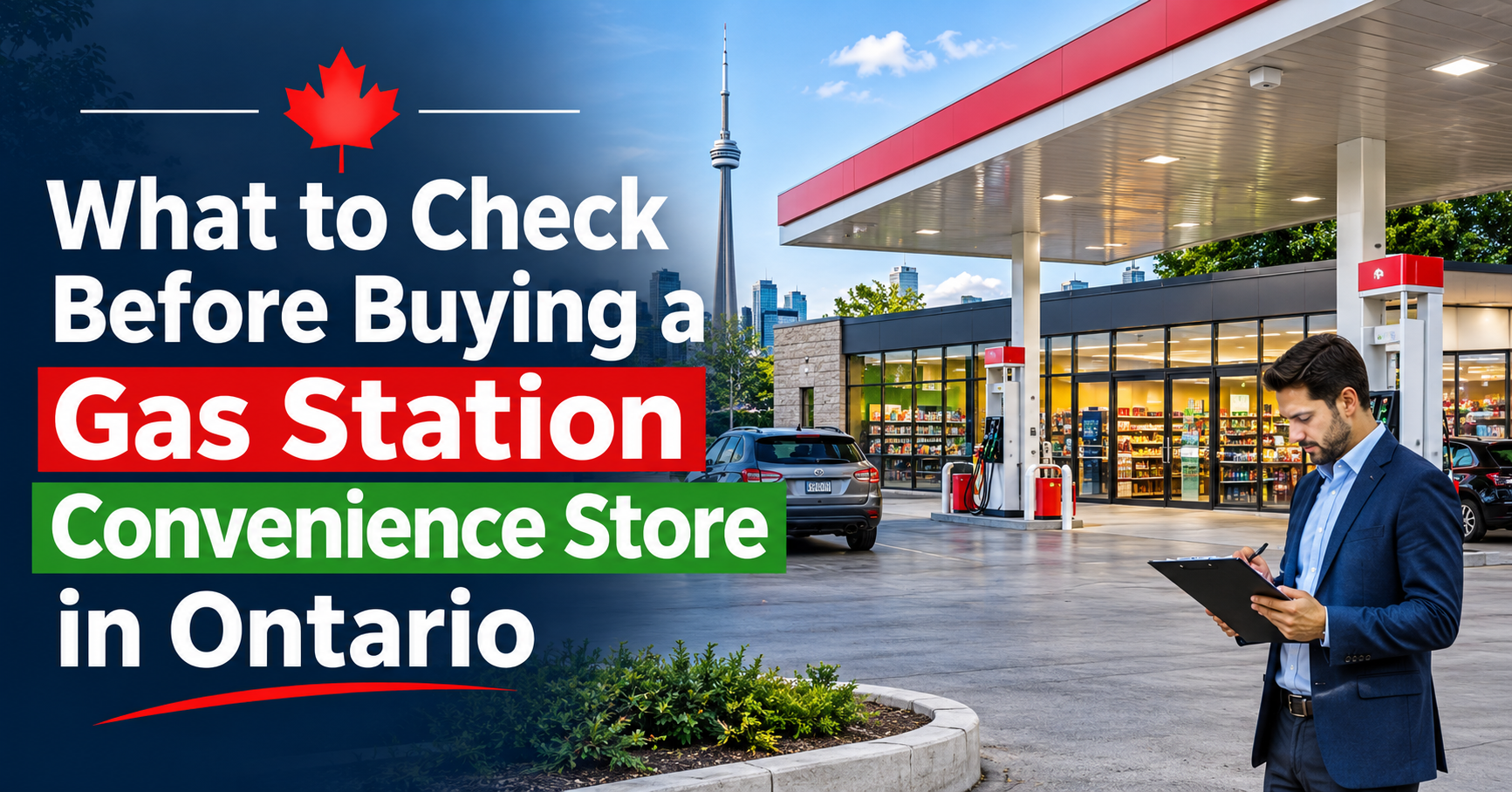
What to Check Before Buying a Gas Station Convenience Store in Ontario
Quick answer: Before buying a gas station convenience store in Ontario, check six things: the fuel supply agreement, the condition and compliance of the underground tanks, the environmental history of the site, the store's financial statements, the licences that transfer with the business, and the lease or property terms. Have a lawyer, accountant and environmental consultant review each item before you sign.
Buying a gas station convenience store in Ontario means buying two businesses at once: a fuel retailer and a convenience store. Each has its own contracts, regulators and risks, and a mistake in either one can be expensive. This guide covers what to check, who should verify each item, and which questions to ask the seller. Infinity Mart publishes this guide, so we kept the advice general and saved our own details for the end.
A regular convenience store depends on foot traffic, product mix and lease terms. A gas station adds fuel supply contracts, underground tanks, safety regulation and environmental history. Fuel brings customers to the site, but the store often decides whether the business is worth owning.
The fuel market is also changing. Kalibrate's national census counted 11,465 retail gasoline stations in Canada at the end of 2025, the lowest total since tracking began, and described the sector as more dependent on retail offerings beyond fuel. Its 2024 census found that about 77% of Canadian gas stations offered loyalty programs. For a buyer, strong inside sales and a well-run operation count for more than the pumps alone.
The fuel supply agreement shapes your margins for years, so read it before you study the store's financials.
Find out whether the site sells branded fuel, who sets the pump price, and what the brand requires for signage, image upgrades and payment systems. Brand requirements can add costs after you take over.
Ask the seller to prove who owns each piece of equipment. If the supplier owns it, find out what happens when the contract ends or when you want to change suppliers.
Check how many years remain, whether minimum litres are required, and what penalties apply if you fall short. Confirm in writing that the agreement transfers to you and on what terms. Kalibrate reported average throughput of 3.4 million litres per site in 2022, ten percent below 2019, so compare the seller's litre figures against that benchmark and ask for supplier invoices to confirm them.
Ontario's Technical Standards and Safety Authority (TSSA) regulates fuel handling. Under the Liquid Fuels regulation (O. Reg. 217/01), fuel facilities must be licensed by TSSA, and modifications must be approved. Before you buy, review:
Tank type, age and construction (single wall or double wall)
Leak detection and monitoring records
Test results and TSSA inspection history
Any tanks that are out of service
Out-of-service tanks matter. Under the Liquid Fuels Handling Code, an underground tank that has been out of service for two years or more generally must be removed, and tank removal or site closure requires an Environmental Assessment Report under TSSA's protocol. A tank the seller calls "inactive" can become your cost. Ask for a written list of every tank, its status, and who pays for any upgrade or removal that is required.
Fuel storage sites carry a higher chance of soil and groundwater contamination than most retail properties. A Phase I Environmental Site Assessment (ESA), done by a qualified environmental consultant, reviews the site's history, records and visible conditions. If it raises concerns, a Phase II ESA tests soil and groundwater.
A Record of Site Condition is a separate matter. Ontario requires one when a property changes to a more sensitive use, such as turning a commercial or industrial site into housing, so a buyer who keeps operating a gas station does not normally need one. Ask your lawyer whether your plans trigger it.
Protect yourself in the contract with an environmental condition in the offer, a clear split of cleanup responsibility, and a review of the seller's insurance and past environmental reports.
Treat the fuel business and the store as separate profit centres and verify each one. Ask for at least three years of financial statements, bank deposits and HST filings, then adjust for a fair wage for the owner-operator.
|
Revenue or cost line |
What to request |
Who verifies |
|
Fuel sales |
Litres sold per month, supplier invoices, margin per litre |
Accountant |
|
Inside store sales |
POS reports, category sales, average basket |
Accountant |
|
Lottery, ATM and services |
Commission statements |
Accountant |
|
Car wash or other services |
Equipment records, service contracts |
Accountant, inspector |
|
Labour and operating costs |
Payroll records, utilities, repair history |
Accountant |
|
Card and loyalty fees |
Program terms, processing statements |
Accountant |
Ask why the owner is selling, and compare sales against nearby competitors before you rely on any projection.
Licences do not always move with the business, so ask which ones transfer and which ones you must apply for.
TSSA fuel licence: Confirm how the transfer works and whether an inspection is needed.
AGCO convenience store licence: Eligible convenience stores have been able to sell beer, cider, wine and ready-to-drink beverages since September 5, 2024. Eligibility depends on retail floor space of 4,000 square feet or less, and AGCO's rules cover display, hours and supply through the LCBO. Check whether the seller holds the licence and what applies to a new owner.
Tobacco, vape and lottery approvals: Confirm what is in place and what you must apply for.
Find out whether the land and building are owned or leased. If leased, check the remaining term, renewal options, assignment rights and rent increases. Confirm who owns the tanks and equipment, how the lease handles environmental responsibility, and whether zoning allows the current use. A strong store on a short lease is a weak purchase. Ask your lawyer to review the lease before you waive any conditions.
Lawyer: Review the purchase agreement, fuel supply agreement, lease and licence transfers.
Accountant: Verify fuel and store revenue, margins and the true cost of the owner's labour.
Environmental consultant: Complete a Phase I ESA and advise on whether a Phase II is needed.
TSSA records: Request licence, inspection and tank records.
Insurer: Confirm coverage and premiums before you commit.
Your own visit: Watch the site at different hours and count customers.
Infinity Mart is a Canadian convenience retail company established in 2022, with 20 locations across Ontario, Manitoba and Quebec. Our formats include standalone stores, gas station combos and vape locations.
If you are comparing opportunities, use the checklist above on any option you consider, including ours, and ask every seller or franchisor for the same documents: financial statements, fuel agreement terms, tank records and licence status. Current opportunities are listed on our website.
Check the fuel supply agreement, tank condition and TSSA compliance, environmental history, financial statements, licences and the lease. Have a lawyer, accountant and environmental consultant review each area.
Prices vary widely with location, fuel volume, store sales, land ownership and equipment condition. Ask for a written breakdown of what the price includes, such as land, building, tanks, inventory and licences, and have an accountant test the numbers.
It can be, but Kalibrate's 2025 census reported fewer stations and lower retail margins, so results depend on inside sales, fuel volume and costs. Verify the seller's numbers and plan for equipment and compliance costs.
Yes. Ontario's Liquid Fuels regulation requires fuel facilities, other than private fuel outlets, to be licensed by TSSA, and modifications must be approved.
It is the contract that sets who supplies your fuel, for how long, on what pricing terms and with what volume commitments. It may also cover branding and equipment ownership.
It depends on the purchase agreement, the findings of the environmental assessments and Ontario law. This is why buyers use a Phase I ESA, set out cleanup terms in writing and get legal advice before closing.
Yes, if it holds an AGCO convenience store licence and meets the eligibility rules, including the 4,000 square foot retail floor space limit. Eligible stores have been able to sell beer, cider, wine and ready-to-drink beverages since September 5, 2024.
Buying a gas station convenience store in Ontario rewards careful preparation. Read the fuel agreement, inspect the tanks and records, test the finances and confirm which licences transfer. Then involve a lawyer, accountant and environmental consultant before you commit. If you would like to see what Infinity Mart offers, you are welcome to browse our current opportunities on our website.