Latest Updates Click Here


How To Build A Modern Restaurant Management Software: Features, Proces
A practical guide to building modern restaurant management software, covering essential features, development steps, and cost to help streamline operations, improve efficiency, and support business growth.
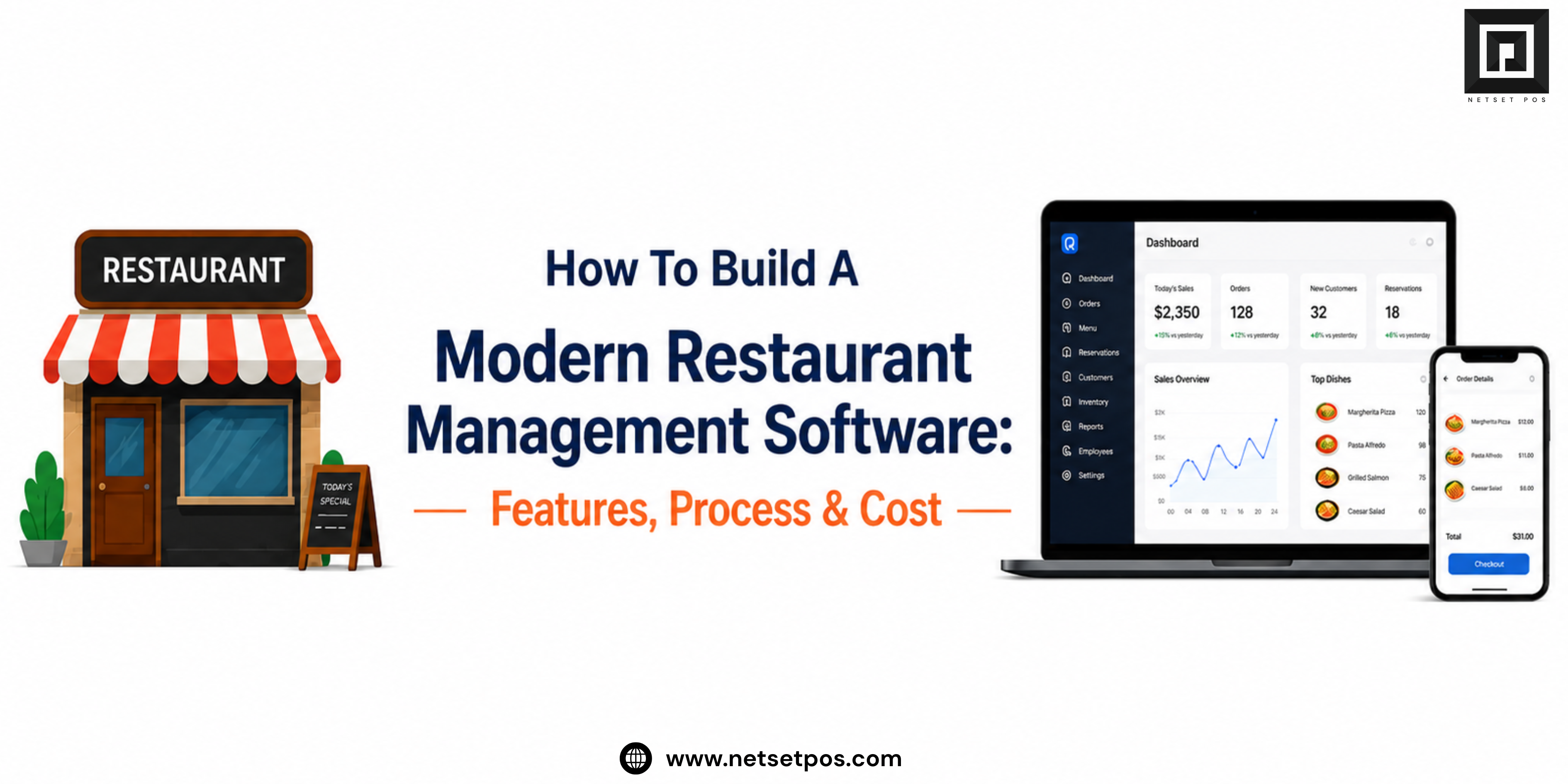
Running a restaurant today is no longer just about great food, it's about efficiency, speed, and delivering a seamless customer experience. That’s why many restaurant owners are shifting toward digital solutions to manage operations. If you’re planning to build a modern restaurant management software, this guide will walk you through the key features, development process, and estimated cost in a practical, solution-oriented way.
Why Modern Restaurant Software Matters
Traditional systems often fail to handle the complexity of today’s food businesses: online orders, dine-in, delivery, inventory, and analytics all need to work together. A smart system eliminates manual work, reduces errors, and gives real-time control over operations.
Businesses like NetSet POS focus on solving these challenges by creating integrated platforms that simplify day-to-day restaurant management without making it complicated for staff.
Key Features You Should Include
Building the right feature set is the foundation of successful software. Instead of adding everything, focus on what truly solves problems.

1. Smart Billing & Order Management
A fast and reliable billing system is essential. It should handle dine-in, takeaway, and delivery orders smoothly. The system must reduce waiting time and improve accuracy.
2. Kitchen Coordination System
A Kitchen order ticket online feature ensures that orders go directly to the kitchen in real time. This avoids confusion, reduces delays, and improves communication between staff.
3. Inventory & Stock Management
Managing inventory manually often leads to wastage or shortages. A good system tracks stock levels, alerts for low inventory, and helps control food costs.
4. Multi-Channel Order Integration
Restaurants today receive orders from multiple sources walk-ins, apps, and websites. A centralized dashboard that manages all orders in one place improves efficiency.
5. Reporting & Analytics
Data is powerful. Your software should provide insights like daily sales, best-selling items, peak hours, and profit margins. This helps owners make better business decisions.
6. User-Friendly Interface
No matter how powerful your software is, if it’s not easy to use, it will fail. Staff should be able to learn and operate it quickly without extensive training.
7. Cloud Accessibility
A Cloud based pos system in India allows restaurant owners to access reports and manage operations from anywhere. This flexibility is crucial for multi-location businesses.
Step-by-Step Development Process
Building restaurant software requires a structured approach. Skipping steps often leads to costly mistakes later.
Step 1: Understand Business Requirements
Start by identifying the type of restaurant you’re targeting—small cafes, fine dining, or chains. Each has different needs. Talk to real restaurant owners to understand their pain points.
Step 2: Define Core Features
Avoid building everything at once. Focus on a Minimum Viable Product (MVP) that includes essential features like billing, order management, and reporting.
Step 3: Choose the Right Technology Stack
Select technologies that support scalability and performance. Cloud-based architecture, mobile compatibility, and secure payment integration are key considerations.
Step 4: UI/UX Design
Design a clean and simple interface. Restaurant staff work in fast-paced environments, so the system must be quick and intuitive.
Step 5: Development & Integration
Develop the software in phases. Integrate third-party services like payment gateways, online ordering platforms, and SMS notifications.
Step 6: Testing & Quality Assurance
Test the software thoroughly in real-world scenarios. Check for bugs, speed issues, and usability problems.
Step 7: Deployment & Training
Once ready, deploy the system and train staff. Even the best software needs proper onboarding to be effective.
Step 8: Continuous Updates
Technology evolves quickly. Regular updates and improvements are necessary to stay competitive.
Cost of Building Restaurant Management Software
The cost depends on complexity, features, and scale. Here’s a realistic breakdown:
1. Basic Software (₹3–8 Lakhs)
-
Billing system
-
Basic reporting
-
Simple inventory tracking
Suitable for small restaurants or startups.
2. Mid-Level Software (₹8–20 Lakhs)
-
Advanced inventory
-
Multi-channel order management
-
Analytics dashboard
-
Mobile compatibility
Ideal for growing restaurants.
3. Advanced Software (₹20+ Lakhs)
-
Multi-location management
-
AI-based insights
-
Third-party integrations
-
Custom workflows
Best for restaurant chains or franchises.
Keep in mind that ongoing costs like maintenance, cloud hosting, and updates should also be considered.
Common Challenges & How to Solve Them
Challenge 1: Staff Resistance to New Technology
Solution: Keep the interface simple and provide proper training.
Challenge 2: Integration Issues
Solution: Use reliable APIs and test integrations thoroughly before launch.
Challenge 3: Data Security Concerns
Solution: Implement secure cloud infrastructure and encryption.
Challenge 4: High Development Cost
Solution: Start with an MVP and scale gradually instead of building everything at once.
Final Thoughts
Building a restaurant management system is not just about technology, it's about solving real operational problems. The goal should be to simplify processes, reduce manual work, and improve customer experience.
A well-designed solution like POS software for restaurant India can transform how restaurants operate by bringing everything from orders to analytics into one seamless platform.
If you approach development with a clear plan, the right features, and a focus on usability, you can create software that not only supports restaurant operations but also drives long-term growth.
FAQs
Q1. How long does it take to build restaurant management software?
It usually takes 3 to 6 months for a basic version and 6 to 12 months for a fully advanced system.
Q2. Can small restaurants afford such software?
Yes, starting with a basic version or subscription-based model makes it affordable.
Q3. Is cloud-based software better than offline systems?
Cloud systems offer flexibility, real-time access, and better scalability compared to offline setups.
Q4. What is the most important feature in restaurant software?
Order and billing management is the most critical, followed by inventory and reporting.
Q5. Can the software handle online orders?
Yes, modern systems are designed to integrate multiple order channels into one dashboard.
Share On :
Tweet | LinkedIn | |