A full guide positioning a Poloniex clone script as a fast, cost-effective way to launch a crypto exchange in 2026, without building from scratch.
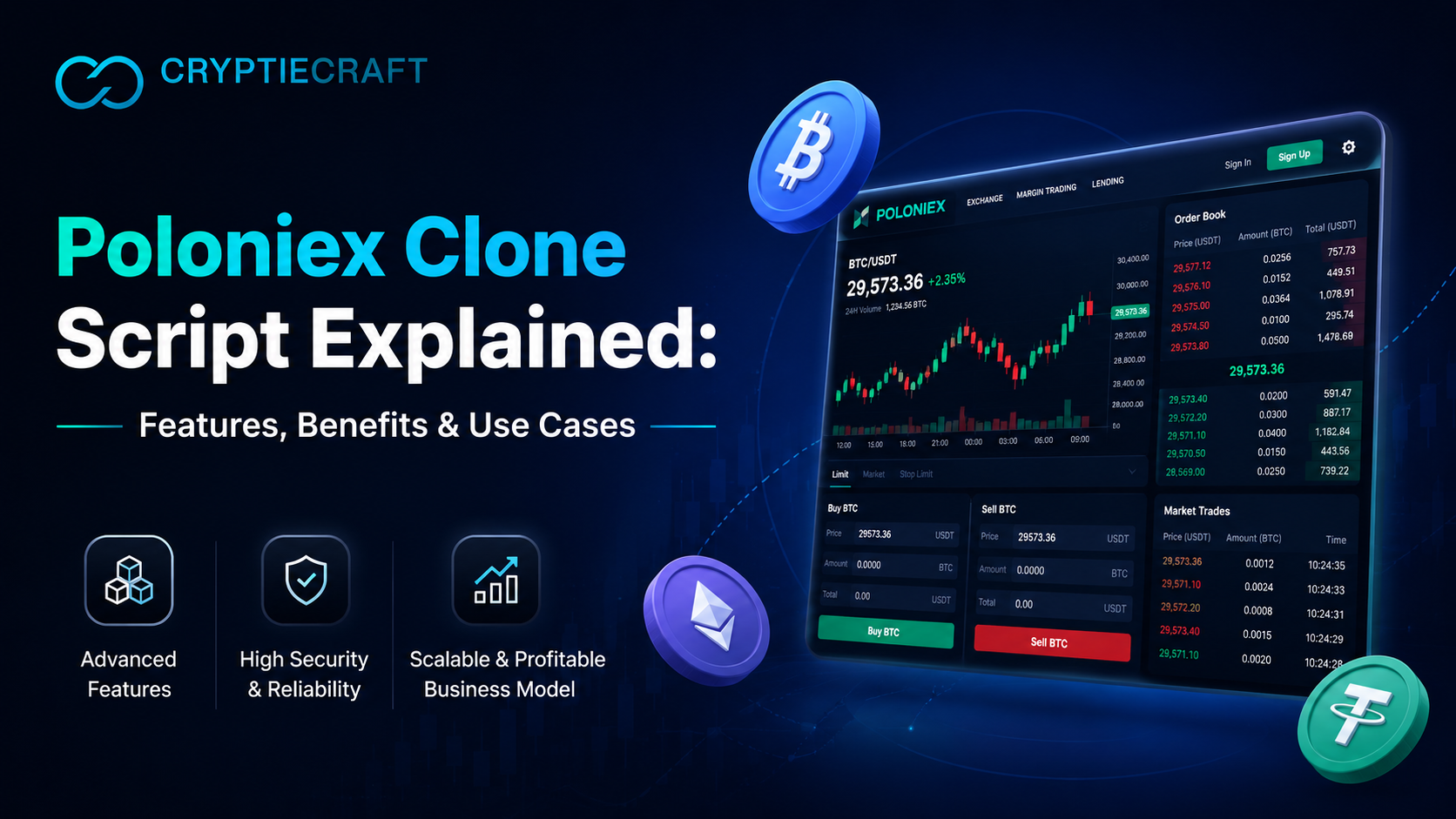
Crypto trading is not a niche hobby anymore. In 2026, new exchanges are launching every month, and founders are racing to capture traders who want fast execution, deep liquidity, and a platform they can trust. A Poloniex clone script has become one of the most practical ways to enter this market without spending years building an exchange from zero.
Poloniex earned its reputation through a strong matching engine, wide coin listings, and a trading interface that both beginners and professionals find easy to use. That combination is exactly why so many entrepreneurs want to replicate it. This guide walks through what a Poloniex clone script actually is, how it works, what it costs, and how to launch one the right way.
Definition and Core Concept
A Poloniex clone script is pre-built exchange software that recreates the core functions and interface style of Poloniex. Instead of writing trading logic, wallet systems, and order books from scratch, a development team customizes an existing, tested codebase to match your brand and business rules.
The script already contains the trading engine, wallet architecture, and admin panel. Your development partner then rebrands the platform, adjusts fee structures, adds or removes trading pairs, and plugs in liquidity and payment integrations. This shortens the build cycle from many months to a matter of weeks.
Trading Flow (User to Order to Matching to Execution)
A trader places a buy or sell order, the order enters the order book, the matching engine looks for a compatible counter order, and once matched, the trade executes and settles into both users' wallets.
Role of Matching Engine and Liquidity
The matching engine is the heart of any exchange. It decides how fast orders fill and how tight the spread stays between buy and sell prices. Paired with strong liquidity, either through market makers or liquidity API integrations, it keeps prices stable even during high volume.
Wallet Integration (Hot and Cold Wallets)
Hot wallets handle everyday withdrawals and deposits for speed. Cold wallets store the majority of user funds offline, away from any internet-facing system, which sharply reduces the risk of a hack.
Launching with a clone script instead of custom development from scratch brings several real advantages.
Faster time-to-market means you can go live in weeks rather than the year or more custom builds often take. Cost-effective development cuts out redundant engineering work, since the core logic is already proven. Because the script follows a proven business model, you are not gambling on untested architecture. Most reputable scripts also allow scalability and customization, so features can be added as your user base grows. And since the underlying engine has already been stress-tested in production, you get high security and performance from day one.
A Poloniex clone script fits several types of businesses.
Startups launching crypto exchanges get a working platform without a large upfront engineering team. Enterprises expanding into crypto trading can add a trading arm to an existing fintech product line. P2P and hybrid exchange platforms can combine order-book trading with peer-to-peer settlement for regions with limited banking access. Niche or regional crypto trading platforms can target a specific country, community, or asset class that larger global exchanges tend to overlook.
Frontend and Backend Technologies
Modern clone scripts typically use React or Angular on the frontend for a responsive trading interface, with Node.js, Python, or Java handling backend logic and API requests.
High-performance engines are often built in C++, Rust, or Go, chosen specifically for low-latency order processing under heavy load.
Exchanges connect to KYC providers, payment gateways, liquidity aggregators, and market data feeds through REST or WebSocket APIs.
Most platforms run on AWS, Google Cloud, or dedicated servers with load balancing, auto-scaling, and geographically distributed nodes for uptime and speed.
Basic vs Advanced Platform Cost
A basic clone with spot trading and standard features costs considerably less than an advanced platform with margin trading, futures, and deep liquidity integrations.
Factors Affecting Development Cost
Pricing shifts based on the number of trading pairs, security audit depth, regulatory compliance work, and how much custom UI and branding is required.
White Label vs Custom Development
White label solutions are quicker and cheaper since the core is reused with your branding. Custom development costs more but gives full ownership over every feature and future roadmap decision.
Security and Compliance Considerations
Regulatory Compliance (KYC/AML)
Exchanges need identity verification and transaction monitoring to meet regulations in the regions they serve, which also builds user trust.
Data Protection and Encryption
User data and transaction records need encryption both in storage and in transit, along with strict access controls for internal teams.
Risk Management Systems
Automated systems should flag unusual trading patterns, withdrawal spikes, or login anomalies before they turn into losses.
Look at the company's past exchange projects, their security audit history, and how transparent they are about timelines and costs. A team that offers full crypto exchange development services end to end, not just a rebranded script, is usually better positioned to support you as your platform grows.
Ask how they handle post-launch support, what happens if the matching engine needs to scale, and whether the source code is fully owned by you after delivery.
Avoid vendors who cannot show live examples of exchanges they have built, and avoid signing off on a platform without an independent security audit.
Liquidity issues can leave order books thin in the early months, which discourages active traders. Security threats remain constant, since exchanges are a prime target for hackers. Regulatory barriers vary widely by country, which means compliance work never really finishes as you expand.
AI-Based Trading Features
AI-driven price prediction, anomaly detection, and personalized trading suggestions are becoming standard rather than optional.
DeFi Integration
More centralized exchanges are adding DeFi features like staking and yield products directly into their platforms.
Cross-Chain Trading
Traders increasingly expect to move assets across blockchains without leaving the exchange, pushing platforms toward native cross-chain support.
A Poloniex clone script gives founders a fast, cost-effective, and proven path into crypto exchange development, without sacrificing security or scalability.
If you want to launch a trading platform without spending a year on ground-up development, a Poloniex clone script is one of the most practical routes available in 2026. The right development partner can turn this proven model into a platform built around your brand, your market, and your growth plan.